
therapies · education ·
Plunging After You Lift? A 12-Week Trial Says You're Paying For It
Two groups trained identically for 12 weeks. One took an ice bath after every session. Strength and muscle grew more in the group that skipped it.
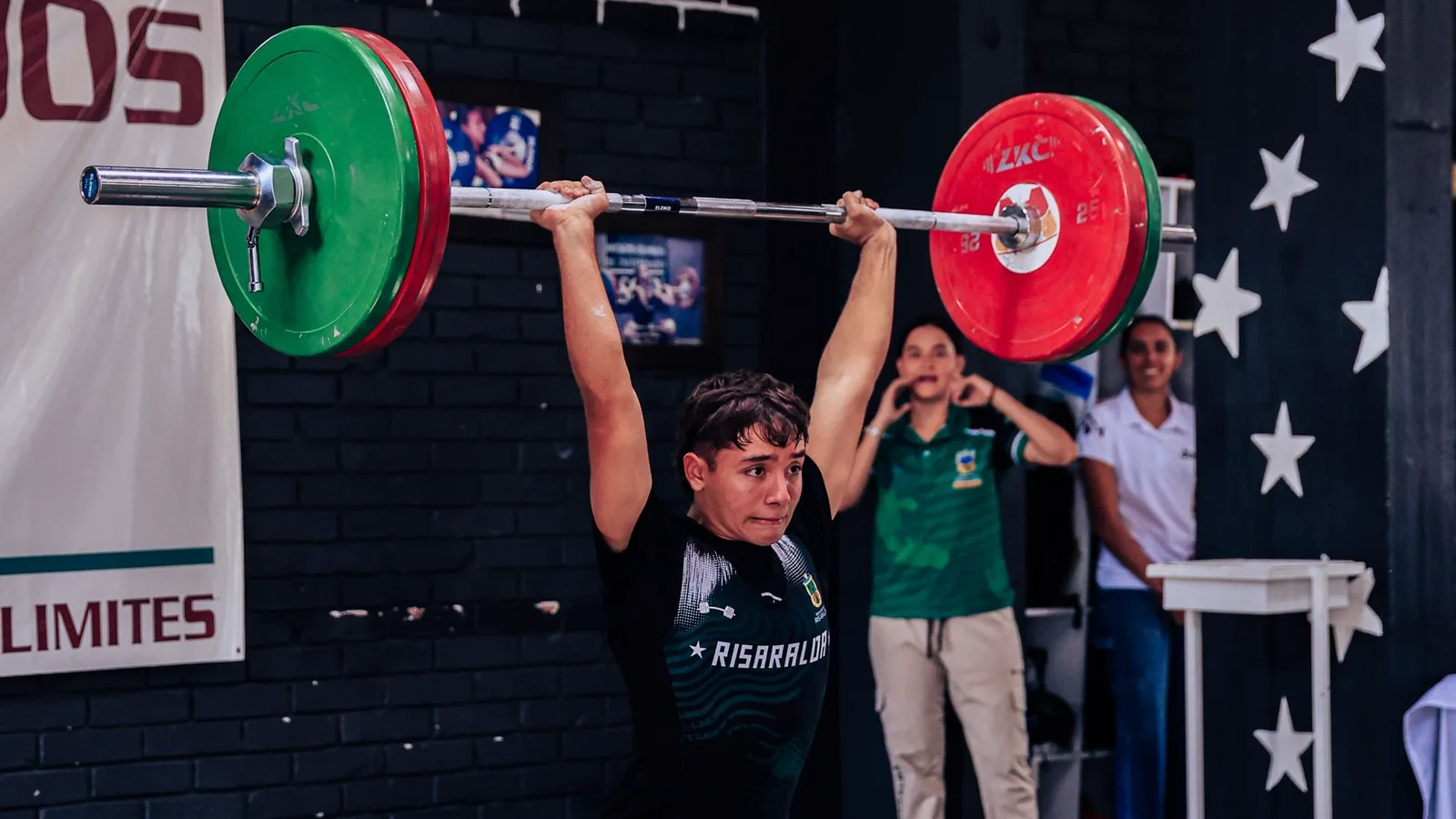
The plunge tub next to the squat rack is one of the most confident pieces of gym equipment in the world. Train hard, get in the cold, recover faster, come back stronger.
Two studies took that apart, and the second one explains the first.
The 12-week trial
Twenty-one physically active men strength trained for 12 weeks, twice a week. After every single session they did one of two things: 10 minutes of cold water immersion, or active recovery (Roberts et al., The Journal of Physiology, 2015).
Same program. Same sessions. One variable.
Strength and muscle mass increased more in the active recovery group than in the cold water group (P < 0.05).
Then the detail that makes it hard to argue with, because it is measured in the tissue rather than on a scale:
| Measure | Active recovery | Cold water |
|---|---|---|
| Isokinetic work | +19% | no significant increase |
| Type II fibre cross-sectional area | +17% | no significant increase |
| Myonuclei per fibre | +26% | no significant increase |
All three rose significantly in the active recovery group and not in the cold group.
Myonuclei per fibre is the one to sit with. Adding nuclei to a muscle fibre is part of how it gains the capacity to grow and hold that growth. That is not a soreness score or a subjective rating. That is the machinery.
The same paper ran a second study with biopsies, where nine men did single-leg work followed by cold or active recovery. Satellite cell numbers rose over 24 to 48 hours after exercise with active recovery, and the counts were greater after active recovery than after cold (P < 0.05). Phosphorylation of p70S6 kinase, a signalling step in the muscle-building pathway, rose after exercise in both conditions but was greater after active recovery.
The authors close with a sentence that is unusually direct for a physiology journal.
The use of CWI as a regular post-exercise recovery strategy should be reconsidered.
Roberts et al., The Journal of Physiology, 2015
Then somebody followed the protein
The obvious next question is where the loss happens. A second team answered it by tracking the actual amino acids (Fuchs et al., The Journal of Physiology, 2020).
Twelve healthy men, average age 21, did a resistance exercise session. Then both legs went into water for 20 minutes: one leg at 8 degrees Celsius, the other at 30 degrees. Each man was his own control, which removes most of the ways a small study goes wrong.
Afterwards they drank a beverage containing 20 grams of labelled milk protein, so the protein could be followed from the drink into the muscle.
The cold leg took up less of that dietary protein into new muscle protein: 0.016 against 0.021 on the incorporation measure (P = 0.016). Muscle protein synthesis rates over the recovery period were lower in the cold leg on both tracers (P = 0.024 and P = 0.025).
And measured across two weeks of training, daily muscle protein synthesis was lower in the cold leg: 1.48 against 1.67 percent per day (P = 0.042).
So the mechanism is not mysterious. The protein you ate afterwards reached the cold muscle less well, and the muscle built less with it.
The trial that partly disagrees
We would rather hand you the disagreement than pretend the field is settled.
Sixteen men resistance trained three days a week for 7 weeks, followed by either 15 minutes of cold water immersion at 10 degrees or passive recovery at 23 degrees, eight men per group (Fyfe et al., Journal of Applied Physiology, 2019).
Improvements in leg press one-rep max were similar between the groups. Strength did not suffer.
Type II muscle fibre cross-sectional area was attenuated with cold. Size did suffer.
The molecular picture matched: mTORC1 signalling after exercise was blunted in the cold group, a protein degradation marker rose, and training-induced increases in heat shock proteins were attenuated.
So put the two trials side by side. Roberts found strength and mass blunted. Fyfe found mass blunted and strength intact. The authors’ own conclusion is narrower than the headline anyone would write from it: post-exercise cold water immersion should be avoided if muscle hypertrophy is desired.
That is where we would leave it. The fibre-growth finding has now shown up twice in separate labs. The strength finding has shown up once and failed to replicate once, and anyone telling you cold definitely costs you strength is ahead of the evidence.
What this does and does not say
It does not say cold is bad for you. It says cold immediately after resistance training works against the specific adaptation you just trained for.
It does not cover other timings. Nothing here tests cold in the morning, cold on a rest day, or cold hours after a session. Those are different questions and this research does not answer them.
It does not cover endurance training. These are resistance training studies. The picture in endurance work is its own literature.
It does not mean recovery feelings are fake. If cold makes you feel less wrecked, that is real. The finding is that the feeling has a price in adaptation, which is exactly the trade nobody selling a tub mentions.
What we are and are not saying
| Claim | Our line |
|---|---|
| Cold plunging treats, cures or prevents anything | Never |
| Cold after lifting blunted strength and muscle gains | Yes, over 12 weeks, against active recovery |
| It blunted fibre size and myonuclei | Yes, +17% and +26% in active recovery, not in cold |
| Every trial agrees it costs strength | No. A 7-week trial found strength intact and fibre size still blunted |
| The mechanism is understood | Partly. Less dietary protein reached new muscle protein, and synthesis rates fell |
| Cold at any time of day ruins training | No. Only post-exercise cold was tested |
| Cold plunging has no uses | No. It has others, and this is not one of them |
Where the design shows up
The reason this result surprises people is that we have been taught to think of inflammation as damage.
It is not, or at least not only. The swelling and signalling after a hard set is not the injury, it is the message. It is how the body is told that what just happened needs to be prepared for next time. Satellite cells arriving, nuclei being added, synthesis machinery switching on.
Put the fire out fast enough and the message never gets delivered. The muscle feels better and learns less.
Which is a pattern worth recognising elsewhere. A symptom is sometimes the repair, and silencing it is not always the same as helping.
“Iron sharpens iron, so one man sharpens another.” Proverbs 27:17, NASB
The verse carries the conviction. Twenty-one men over twelve weeks carry the number.
What to do this week
If you lift to get stronger, put distance between the set and the cold.
The trials tested cold immediately after training. Walking, easy cycling or simply going home and eating are what the comparison group did, and they out-gained the plungers on every tissue measure.
If you love the plunge, keep it, and move it. A different day, or a long way from the session, keeps the thing you enjoy without spending the adaptation you paid for in the gym.
And if you are plunging after lifting specifically because somebody told you it speeds recovery, that is the claim these two studies were built to test.
Read this next: what cold plunging does have evidence for, and the risk nobody puts in the reel: do cold plunges actually work. How cold and how long, if you are going to: the cold plunge ladder. And the metabolic side: cold really does switch on brown fat.
Sources
- Roberts LA, Raastad T, Markworth JF, et al. “Post-exercise cold water immersion attenuates acute anabolic signalling and long-term adaptations in muscle to strength training.” The Journal of Physiology, 2015;593(18):4285-4301. https://pubmed.ncbi.nlm.nih.gov/26174323/
- Fuchs CJ, Kouw IWK, Churchward-Venne TA, et al. “Postexercise cooling impairs muscle protein synthesis rates in recreational athletes.” The Journal of Physiology, 2020;598(4):755-772. https://pubmed.ncbi.nlm.nih.gov/31788800/
- Fyfe JJ, Broatch JR, Trewin AJ, et al. “Cold water immersion attenuates anabolic signaling and skeletal muscle fiber hypertrophy, but not strength gain, following whole-body resistance training.” Journal of Applied Physiology, 2019;127(5):1403-1418. https://pubmed.ncbi.nlm.nih.gov/31513450/
Article metadata retrieved from PubMed. Photograph from Pexels. Scripture quoted from the New American Standard Bible.
Educational content from True Health Solutions. We do not diagnose or prescribe, and nothing here is a substitute for care from someone who knows your history. The body heals. We write about what supports that design.
Questions people ask
- Does an ice bath after lifting hurt muscle growth?
- In a 12-week randomized trial, 21 men strength trained twice a week with either 10 minutes of cold water immersion or active recovery after each session. Strength and muscle mass increased more with active recovery. Isokinetic work rose 19%, type II fibre cross-sectional area 17% and myonuclei per fibre 26% in the active recovery group, and not in the cold group.
- Why would cold do that?
- A second study measured it directly. Cold water immersion after resistance exercise lowered the muscle's capacity to take up dietary protein-derived amino acids and direct them into new muscle protein, and lowered muscle protein synthesis rates across a two-week training block.
- How cold and how long were these protocols?
- 10 minutes of cold water immersion in the 12-week trial. In the protein study, 20 minutes at 8 degrees Celsius in one leg against 30 degrees in the other, so each man was his own control.
- Does this mean cold plunging is bad?
- No. It means the timing has a cost. Cold after lifting works against the adaptation you just trained for. Cold at other times of day is a different question this research does not answer.
- What if I just want to feel recovered?
- That is a real goal and cold may serve it. Just know you are trading some adaptation for it. The trial authors say the use of cold water immersion as a regular post-exercise recovery strategy should be reconsidered, which is unusually blunt language for a physiology paper.
