
therapies · education ·
Does An Epsom Bath Actually Give You Magnesium? The Receipts Are Thinner Than The Claim
Magnesium crosses skin in a lab, and a cream pilot nudged a blood marker. Neither is a bathtub, and the report cited for the bathtub is not peer reviewed.
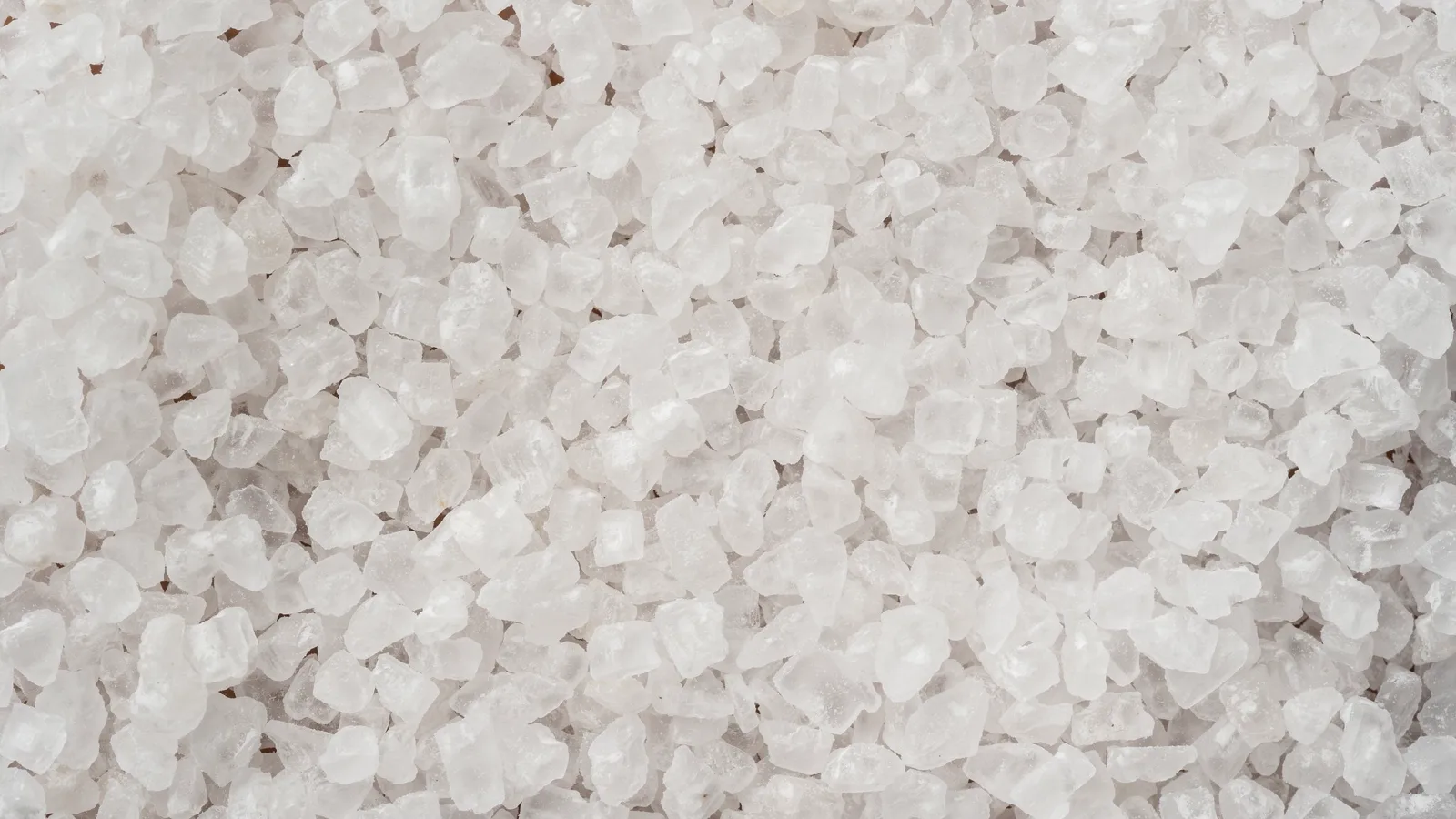
Somewhere between the pharmacy aisle and the wellness internet, a bag of Epsom salt stopped being a nice soak and became a magnesium delivery system.
The pitch is specific enough to check: your skin absorbs the magnesium, which fixes a deficiency most people supposedly have. So we went looking for the trial.
It is not there. Here is what is.
What actually got measured
A pathway exists. Researchers set out to estimate how much magnesium permeates human skin and what role hair follicles play in getting it through. They found magnesium penetrates the stratum corneum, the outer barrier layer, in a way that depends on concentration and time of exposure, and that hair follicles make a significant contribution to that penetration (Chandrasekaran et al., Magnesium Research, 2016).
That is a real finding and it settles a genuinely contested question. Magnesium ions are not simply locked out by skin.
What it is not: a person in a tub. This is skin permeation measured under laboratory conditions with imaging techniques, not free-living outcomes. A pathway tells you something can happen. It does not tell you how much happens in a bath, in twenty minutes, at the concentration a scoop of salt makes in eighty litres of water.
Then somebody tried a product. A single-blind, parallel pilot study randomly assigned 25 participants to a magnesium cream delivering 56 mg of magnesium a day, or a placebo cream, for two weeks (Kass et al., PLOS One, 2017).
Serum magnesium in the cream group went from 0.82 to 0.89 mmol/L. The authors describe that as clinically relevant, and it did not reach statistical significance overall, at p = 0.29. It reached significance only in a subgroup of non-athletes, at p = 0.02. Urinary magnesium rose slightly with no significance either, at p = 0.48.
The authors are straightforward about where this leaves things: no previous study had looked at transdermal magnesium in humans, their dose was low compared with commercial products, and future studies should look at higher doses for longer.
A 25-person pilot on a cream, mostly non-significant, calling for better work. That is the strongest human evidence in this lane, and it is still not a bath.
The report that keeps getting cited as if it were a trial
There is a widely circulated report associated with the Epsom Salt Council that appears in a great many bath-marketing slides, usually described in language that makes it sound like a clinical study.
It is not a peer-reviewed, indexed clinical trial in the same class as the papers above.
We are not going to pass an industry council document off as evidence, and we are naming it because you will meet it. If a properly designed, peer-reviewed bath trial is published, we will cover it and say so.
A council report is not a trial. The distance between those two things is the whole reason anybody should trust a citation.
What actually does move magnesium
Food, and the evidence there is a different quality altogether.
A dose-response meta-analysis of prospective cohort studies pooled nine articles covering ten cohorts, 20,119 cases of hypertension among 180,566 participants (Han et al., Nutrition Journal, 2017).
Comparing highest dietary magnesium intake with lowest gave a relative risk of 0.92 (95% CI 0.86 to 0.98). Each 100 mg a day increment was associated with about a 5% lower risk of hypertension (RR 0.95, 95% CI 0.90 to 1.00).
Two pieces of honesty on that number. That confidence interval reaches 1.00, which puts the per-100mg estimate right on the edge of significance rather than comfortably past it. And these are cohort studies, so people eating more magnesium are people eating more greens, beans, seeds and whole grains, and no analysis fully separates the mineral from the meal it arrived in.
We would rather tell you that than round it off. It is still a far better evidence base than anything on the transdermal side.
What we are and are not saying
| Claim | Our line |
|---|---|
| Epsom baths treat, cure or prevent any condition | Never |
| Magnesium can permeate human skin | Yes, shown in lab conditions, helped by hair follicles |
| A cream raised serum magnesium | Partly. 0.82 to 0.89 mmol/L, not significant overall, significant in one subgroup |
| A home Epsom bath restores magnesium status | No trial we could find shows this |
| The Epsom Salt Council report proves it | No. Not peer reviewed, not indexed, not a trial |
| Dietary magnesium tracks with lower blood pressure risk | Yes, in cohorts, with the per-100mg interval touching 1.00 |
| A soak is worthless | No. Heat and rest are their own thing |
The safety part, which is short but real
Warm water and salt are low risk for most people and not for everyone.
Broken skin and open wounds change the calculation. So does significant kidney disease, because impaired kidneys are exactly what turns extra magnesium from harmless into a problem. Unstable blood pressure and hot water are a combination worth asking about rather than assuming. And a hot tub you have been lying in for a while is a place people get dizzy standing up.
None of that is a reason not to take a bath. It is a reason to ask someone who knows your history if any of it applies to you.
Where the design shows up
The interesting thing about the skin permeation study is not that magnesium got through. It is how it got through.
Hair follicles. Not the broad surface of the barrier, which is built precisely to keep things out, but the small openings that were never part of the wall. The stratum corneum is one of the better engineering solutions in the body, a layer that keeps water in and the world out, and it holds. What leaks is the seams.
That is worth remembering the next time something is sold on the promise of soaking in. The barrier is not a design flaw waiting for the right product. It is the point.
“Better is a dry morsel and quietness with it than a house full of feasting with strife.” Proverbs 17:1, NASB
The verse carries the conviction. One permeation study and a 25-person pilot carry what little evidence there is.
What to do this week
Eat the magnesium, and take the bath for the bath.
Pumpkin seeds, leafy greens, beans, almonds and unsweetened cacao are where this mineral actually arrives in quantity, and they bring the rest of the plate with them. That is the lane with the cohort data behind it.
Then, if you like a soak, have one without asking it to do a second job. Warm water, twenty minutes, no phone. That is heat and stillness and a door that closes, and those are worth having on their own terms. They were never the part that needed a study.
Read this next: the mineral’s better-evidenced job, and how thin even that evidence is: what the magnesium and sleep trials found. For the heat-without-the-claims version of the same question: is a hot bath doing what the sauna studies find. And for how we grade something like a council report: two of medicine’s top editors say you can’t believe much of it.
Sources
- Chandrasekaran NC, Sanchez WY, Mohammed YH, Grice JE, Roberts MS, Barnard RT. “Permeation of topically applied Magnesium ions through human skin is facilitated by hair follicles.” Magnesium Research, 2016;29(2):35-42. https://pubmed.ncbi.nlm.nih.gov/27624531/
- Kass L, Rosanoff A, Tanner A, Sullivan K, McAuley W, Plesset M. “Effect of transdermal magnesium cream on serum and urinary magnesium levels in humans: A pilot study.” PLOS One, 2017;12(4):e0174817. https://pubmed.ncbi.nlm.nih.gov/28403154/
- Han H, Fang X, Wei X, et al. “Dose-response relationship between dietary magnesium intake, serum magnesium concentration and risk of hypertension: a systematic review and meta-analysis of prospective cohort studies.” Nutrition Journal, 2017;16(1):26. https://pubmed.ncbi.nlm.nih.gov/28476161/
Article metadata retrieved from PubMed. Photograph from Pexels. Scripture quoted from the New American Standard Bible.
Educational content from True Health Solutions. We do not diagnose or prescribe, and nothing here is a substitute for care from someone who knows your history. The body heals. We write about what supports that design.
Questions people ask
- Do Epsom salt baths raise your magnesium level?
- There is no peer-reviewed randomized trial we could find showing that an ordinary home Epsom bath reliably raises magnesium status the way oral intake does. The studies usually cited for this are a skin permeation experiment and a small cream pilot, and neither one is a bath.
- Can magnesium cross skin at all?
- Yes, under lab conditions. Researchers found magnesium penetrates human stratum corneum in a way that depends on concentration and exposure time, with hair follicles making a significant contribution. That establishes a pathway. It does not establish a dose.
- What did the magnesium cream study find?
- A single-blind pilot in 25 adults used 56 mg of magnesium a day as a cream for two weeks. Serum magnesium rose from 0.82 to 0.89 mmol/L, which did not reach significance overall at p = 0.29, and reached it only in a subgroup of non-athletes. The authors called for higher doses and longer durations.
- What about the Epsom Salt Council report?
- It circulates constantly in bath marketing and it is not a peer-reviewed, indexed clinical trial. We are not going to launder an industry council report into evidence. If a clean bath trial appears, we will cover it.
- So is a soak pointless?
- No. Heat, stillness and twenty minutes where nobody can reach you are worth something on their own terms. The claim we are correcting is the mineral one, not the bath.
