
education ·
New Cancer Drugs Added A Median Of 2.4 Months. Here Are 8 Questions To Ask
Three reviews of cancer drug approvals landed between 2.4 and 2.8 months of added survival. What a median hides, and the questions to ask first.

Three different research teams, working on two continents with different drug lists and different years, asked the same question: when a new cancer drug gets approved, how much longer do people actually live?
They all came back with roughly the same answer, and it is smaller than the word “breakthrough” suggests.
The number, three times over
Swiss researchers went through the approval packages for every novel cancer drug the FDA approved for the first time between 2000 and 2016. That came to 92 drugs across 100 indications, resting on 127 clinical trials. The median absolute survival gain was 2.40 months (Ladanie et al., JAMA Network Open, 2020).
A second team ran the same exercise over a longer window, 2003 to 2021, covering 124 drugs across 374 indications. Their figure was 2.80 months, with an interquartile range of 1.97 to 4.60 (Michaeli and Michaeli, Journal of Clinical Oncology, 2022). Their own summary sentence is worth reading twice: new cancer drugs “substantially reduce the risk of death and tumor progression, yet only marginally extend patient survival.”
Then Europe. Of the 68 cancer indications the European Medicines Agency approved between 2009 and 2013, a survival gain had been demonstrated for only 24 of them, which is 35%, at the time the drug went on the market. Where a gain existed it ran from 1.0 to 5.8 months, with a median of 2.7 (Davis et al., BMJ, 2017).
Two to three months. Two decades of approvals, two regulators, three independent analyses.
What a median is, and what it hides
A median is the middle. Line up all the results from smallest to largest and point at the one in the centre. Half are below it and half are above.
So it is not a promise to anybody. It is a description of the pile.
That matters in both directions, and this is the part that gets told as half a story. A middle value of two to three months can sit next to a small group of people who live years longer, which is exactly what happens with some immunotherapies. It can also sit next to a large group who gained nothing at all. Neither of those groups appears anywhere in the number.
Which makes the median a good opening question and a bad place to stop. The follow-up question is the useful one: where in that spread is somebody like me likely to land?
Ten days that counted as a win
Here is how small a real, published, statistically significant survival benefit can be.
A double-blind phase III trial gave 569 people with advanced pancreatic cancer either gemcitabine plus erlotinib or gemcitabine plus a placebo. Median overall survival went from 5.91 months to 6.24 months (Moore et al., Journal of Clinical Oncology, 2007).
That gap is a third of a month. About ten days. And it cleared the statistical bar cleanly, with a hazard ratio of 0.82, a confidence interval of 0.69 to 0.99, and a P value of .038. The paper reported it, correctly, as the first trial to significantly improve survival in advanced pancreatic cancer by adding anything to gemcitabine.
Now the other half, because a family told only “ten days” has also been handed half a story. One-year survival in that same trial was 23% with erlotinib against 17% without, and that difference was also significant. The authors reported that most of the extra side effects were grade 1 or 2, the milder end of the scale.
Both of those sentences describe the same trial. “Statistically significant” means a gap probably is not a fluke. It does not mean the gap is large. Enrol enough people and a very small difference will clear the bar.
The stand-in problem
Waiting to see whether people live longer takes years. So trials often measure something that shows up sooner: whether tumours shrink on a scan, or how long before the cancer visibly grows. Those are called surrogate endpoints, which is a fancy way of saying stand-ins.
The trouble is simple to state. A tumour that shrinks on a scan has not necessarily bought anybody time.
Researchers gathered 36 published papers containing 65 separate measurements of how well a stand-in tracked actual survival. More than half of those correlations, 34 of 65, were weak. Sixteen were middling, and 15 were strong (Prasad et al., JAMA Internal Medicine, 2015). Their conclusion was that the evidence supporting the use of stand-ins in oncology is limited.
Accelerated approval is where this gets concrete. It is the FDA’s fast track: a drug can reach the shelf on a stand-in while the confirmation trial is still running. The FDA reviewed 93 cancer indications granted accelerated approval between 1992 and 2017 and called the pathway a success, because only 5 of the 93 had been withdrawn.
A follow-up review looked at what those confirmation trials actually found. For 19 of the 93, about one in five, the confirmatory trial reported an improvement in overall survival. For another 19 the confirmation was the same stand-in used to get approved in the first place, and for 20 it was a different stand-in (Gyawali, Hey and Kesselheim, JAMA Internal Medicine, 2019).
“Not withdrawn” and “shown to help people live longer” are two very different bars, and most patrons assume the second one when they hear the drug was approved.
How often a trial clears a meaningful benefit bar
Oncologists built a yardstick for this, because “significant” was doing too much work. The European Society for Medical Oncology Magnitude of Clinical Benefit Scale asks whether a benefit is big enough to matter to a person rather than merely big enough to measure.
Researchers applied it to the randomised trials behind every FDA cancer drug approval from 2006 to 2016: 63 drugs, 118 indications, 105 trials that could be scored. Forty-six of the 105, which is 43.8%, met the meaningful-benefit threshold (Tibau et al., Journal of the National Cancer Institute, 2018).
Two findings inside that are genuinely encouraging and usually left out. Every single trial of treatment given around surgery to lower the chance of the cancer coming back met the bar. And the share of trials clearing it improved steadily across the decade studied. Targeted drugs paired with a companion test, the kind that checks whether your particular tumour has the thing the drug aims at, were far more likely to qualify.
The weaker half was treatment for advanced disease, where 38.8% met the bar.
A note on how harm gets described
Four oncologists writing in the BMJ made the case that cancer trials need to report harms more transparently, and catalogued the vocabulary that does the smoothing: acceptable, manageable, feasible, favorable, tolerable, safe (Gyawali et al., BMJ, 2018).
We are citing that paper for its argument rather than for a figure, because its specific trial-by-trial counts sit in the full text and we have not verified them against the original trial reports.
The argument still stands on its own. “Acceptable” is a judgment, not a measurement, and the useful question is acceptable to whom: the trial team, the regulator, or the person living in the body. So ask for the counts instead of the adjective. How many people, how serious, compared with what.
What people say the months have to be worth
Somebody asked the patients directly, which almost nobody does.
Researchers walked 81 people who had already been treated for advanced lung cancer through scripted hypothetical choices, each one describing a patient expected to live four months without treatment. The median survival gain they said they would need before accepting chemotherapy was 4.5 months if the side effects were mild and 9 months if they were severe (Silvestri, Pritchard and Welch, BMJ, 1998).
The spread was enormous. Some would accept it for one more week. Others would not accept it for 24 more months.
And then the finding that reframes the whole conversation. Only 18 of the 81, about a fifth, would choose chemotherapy for a three-month survival gain. But 55 of the 81, more than two thirds, would choose it if it substantially reduced their symptoms while adding no time at all.
Read that again, because it says something the survival statistics cannot. For most of those people the months were not the point. Feeling better was.
The gap in the exam room
This is the finding we would put on the wall.
Researchers surveyed 1,193 people receiving chemotherapy for stage IV lung or colorectal cancer, which is cancer that has spread and cannot be cured, and checked their medical records alongside their answers. Sixty-nine percent of the lung cancer patients and 81% of the colorectal cancer patients did not report understanding that the chemotherapy was not at all likely to cure them (Weeks et al., New England Journal of Medicine, 2012).
Then the detail that stings. Patients who rated communication with their doctor most favourably were more likely to hold the inaccurate belief, with an odds ratio of 1.90.
Many patients receiving chemotherapy for incurable cancers may not understand that chemotherapy is unlikely to be curative, which could compromise their ability to make informed treatment decisions that are consonant with their preferences.
Weeks et al., New England Journal of Medicine, 2012
A kind conversation and a clear one are not the same conversation. Warmth is good and nobody should want less of it. Warmth without plain numbers can send a family home planning around a cure that was never on the table, and that is not a small thing to get wrong.
Where cancer treatment plainly earns its place
None of the above is an argument against treatment, and it would be dishonest to leave it sounding like one.
For some cancers chemotherapy is routinely curative, including in people who arrive with disease that has already spread widely. A review in Nature Clinical Practice Oncology names them: testicular cancer, gestational choriocarcinoma, Hodgkin disease and the high-grade lymphomas (Savage et al., 2009). Those are not marginal gains. Those are rescues, and they are the reason the field exists.
The same review is equally blunt about the other end: in the common advanced cancers, more than 40 years of cytotoxic drug development brought no significant change in cure rates. Both of those sentences are in the same paper.
Treatment given around surgery to reduce the chance of recurrence is also a different decision from treatment for advanced disease, and the Tibau scoring above showed it: every such trial cleared the meaningful-benefit bar. And in the European data, by a median of 5.4 years after approval, 35 of the 68 indications had shown a gain in survival or quality of life. Half had arrived late. The other half were still uncertain.
The older 2% figure, and the denominator behind it
One older paper circulates constantly in this conversation, usually without its fine print, so it earns a careful look rather than a dismissal.
Using randomised trial evidence and 1998 incidence data for adults, three researchers estimated that curative and adjuvant cytotoxic chemotherapy contributed to five-year survival in about 2.3% of adults diagnosed with 22 major cancers in Australia and 2.1% in the United States (Morgan, Ward and Barton, Clinical Oncology, 2004).
Now the part that gets dropped. That percentage divides the people who benefited by everyone diagnosed with those cancers, including the people who were never candidates for chemotherapy and the people who never received any. It is a population share, not a person’s chance of benefit when an oncologist recommends treatment. A five-year endpoint also cannot see a gain measured in months, the paper covers classic cytotoxic chemotherapy rather than targeted drugs or immunotherapy, and the underlying data are now decades old.
Using that figure to argue chemotherapy never works is as careless as using a testicular cancer cure to argue it always does. Honest numbers cut both ways, and a number quoted without its denominator is not an honest number yet.
What we are and are not saying
| Claim | Our line |
|---|---|
| Anyone should refuse, delay or stop cancer treatment | Never. That decision belongs with you and your care team |
| New cancer drug approvals added a median of two to three months | Yes. 2.40, 2.80 and 2.7 months in three independent reviews |
| That number predicts what one person will gain | No. A median describes the pile, not the person |
| Chemotherapy is useless | No. It is routinely curative in several cancers |
| Most approval trials clear a meaningful-benefit bar | No. 43.8% did, though the share improved over the decade |
| Fast-track approval means survival was proven | No. 19 of 93 confirmed a survival gain |
| The 2% figure proves chemotherapy does not work | No. It is a population share with a wide denominator |
| Food or any therapy replaces cancer treatment | Never |
Stewardship alongside care
Treatment decisions get made in an exam room. A person walking through cancer is carried by a great deal more than a prescription, and that part is not the oncologist’s job.
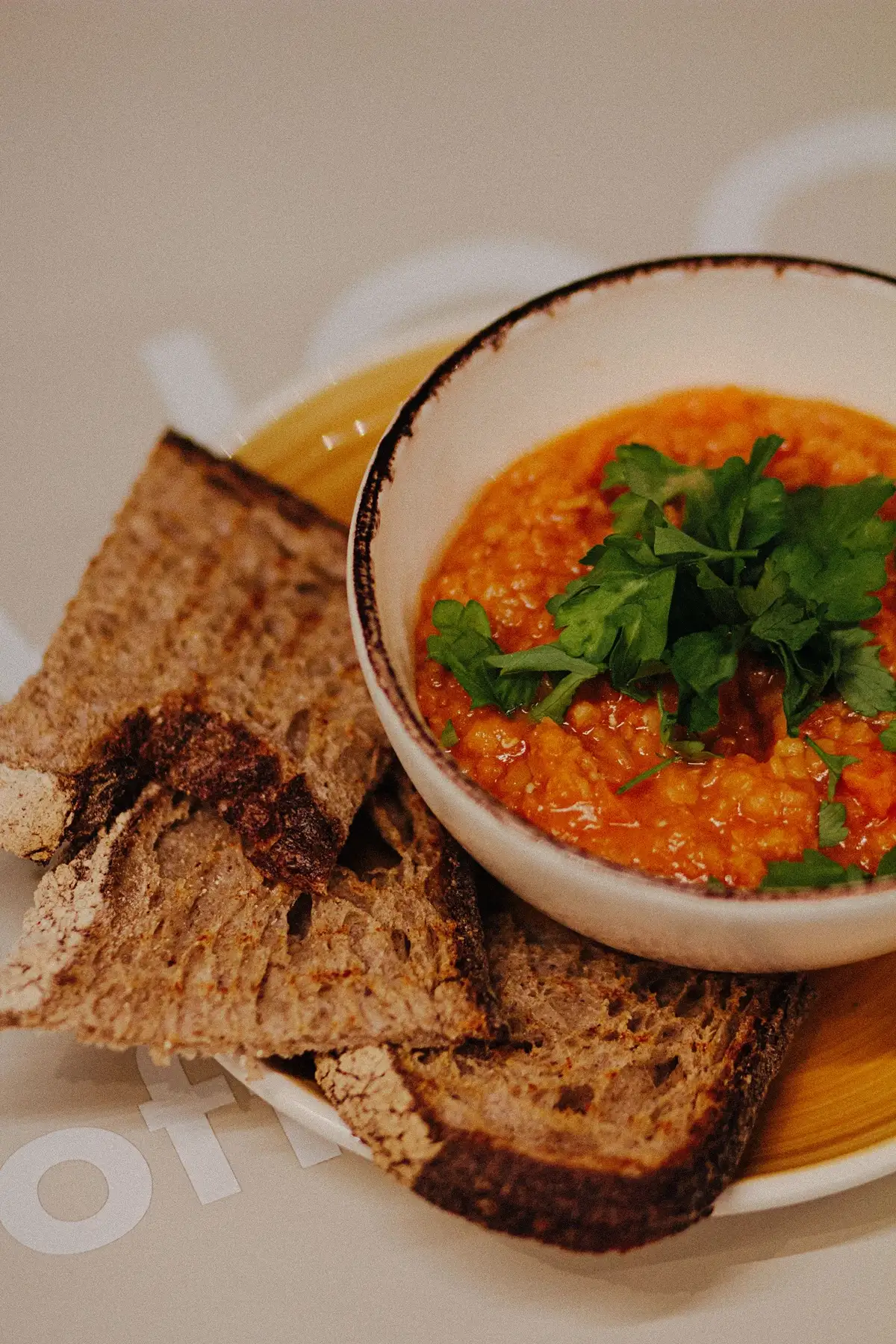
So this is where patrons can steward what is actually in our hands, alongside the care team and never in place of it. Nourishing plant-forward meals on the days the appetite allows. Real rest. Gentle movement when the care team agrees to it. Prayer. Friends who turn up with a pot of lentil soup and a ride to the next appointment. None of that treats a tumour, and we will never say it does. It feeds and steadies the person receiving the treatment, which is a different job and a real one.
“So teach us to number our days, that we may present to You a heart of wisdom.” Psalm 90:12, NASB
The verse carries the conviction. Three reviews of cancer drug approvals carry the months.
The 8 questions to take with you
Bring a notebook. Bring somebody who will remember what was said. Then ask:
- What is the goal here: a cure, lowering the chance it comes back, or more time and comfort? These are three different conversations and they get held in the same tone of voice.
- Is this number a median or an average, and what is the range? An average can be pulled up by a few long responders.
- Can I have it in months and in percentage points, not just percentages? The same drugs can be described as cutting the risk of death by about a quarter and as adding under three months. Both are true at once.
- What endpoint was this drug approved on? Survival, or a stand-in like tumour shrinkage? Was it an accelerated approval, and has a survival benefit been confirmed since?
- What are the one-year and two-year survival numbers, with and without this drug? In the erlotinib trial the medians differed by about ten days while one-year survival differed by six percentage points.
- What happens if we do not do this? What does the comparison group in the trial actually receive: another drug, supportive care, or watchful waiting?
- Was quality of life measured, and what happened to it? Then ask for serious side effects as counts rather than adjectives.
- If the months are small, what would make them good months? This is the question the lung cancer study says most people actually care about, and it rarely gets asked out loud.
These are not a script for saying no. They are how consent stops being a signature and becomes a decision.
Read this next: the same tradeoff conversation about a very different drug: antibiotics save lives and they cost something. How a drug’s benefit gets quoted to you, and why the same trial can sound enormous or tiny: your statin’s benefit was quoted as a percentage. Why the famous medical-error death toll does not survive scrutiny, and what the defensible number is: one Johns Hopkins estimate ranks this killer third. The list worth carrying into any hospital stay: nearly 1 in 4 hospital stays had an adverse event. And how a side effect becomes a second prescription: the prescribing cascade.
Sources
- Ladanie A, Schmitt AM, Speich B, et al. “Clinical Trial Evidence Supporting US Food and Drug Administration Approval of Novel Cancer Therapies Between 2000 and 2016.” JAMA Network Open, 2020;3(11):e2024406. https://pubmed.ncbi.nlm.nih.gov/33170262/
- Michaeli DT, Michaeli T. “Overall Survival, Progression-Free Survival, and Tumor Response Benefit Supporting Initial US Food and Drug Administration Approval and Indication Extension of New Cancer Drugs, 2003-2021.” Journal of Clinical Oncology, 2022;40(35):4095-4106. https://pubmed.ncbi.nlm.nih.gov/35921606/
- Davis C, Naci H, Gurpinar E, Poplavska E, Pinto A, Aggarwal A. “Availability of evidence of benefits on overall survival and quality of life of cancer drugs approved by European Medicines Agency: retrospective cohort study of drug approvals 2009-13.” BMJ, 2017;359:j4530. https://pubmed.ncbi.nlm.nih.gov/28978555/
- Moore MJ, Goldstein D, Hamm J, et al. “Erlotinib plus gemcitabine compared with gemcitabine alone in patients with advanced pancreatic cancer: a phase III trial of the National Cancer Institute of Canada Clinical Trials Group.” Journal of Clinical Oncology, 2007;25(15):1960-1966. https://pubmed.ncbi.nlm.nih.gov/17452677/
- Prasad V, Kim C, Burotto M, Vandross A. “The Strength of Association Between Surrogate End Points and Survival in Oncology: A Systematic Review of Trial-Level Meta-analyses.” JAMA Internal Medicine, 2015;175(8):1389-1398. https://pubmed.ncbi.nlm.nih.gov/26098871/
- Gyawali B, Hey SP, Kesselheim AS. “Assessment of the Clinical Benefit of Cancer Drugs Receiving Accelerated Approval.” JAMA Internal Medicine, 2019;179(7):906-913. https://pubmed.ncbi.nlm.nih.gov/31135808/
- Tibau A, Molto C, Ocana A, et al. “Magnitude of Clinical Benefit of Cancer Drugs Approved by the US Food and Drug Administration.” Journal of the National Cancer Institute, 2018;110(5):486-492. https://pubmed.ncbi.nlm.nih.gov/29244173/
- Gyawali B, Shimokata T, Honda K, Ando Y. “Reporting harms more transparently in trials of cancer drugs.” BMJ, 2018;363:k4383. https://pubmed.ncbi.nlm.nih.gov/30385466/
- Silvestri G, Pritchard R, Welch HG. “Preferences for chemotherapy in patients with advanced non-small cell lung cancer: descriptive study based on scripted interviews.” BMJ, 1998;317(7161):771-775. https://pubmed.ncbi.nlm.nih.gov/9740561/
- Weeks JC, Catalano PJ, Cronin A, et al. “Patients’ expectations about effects of chemotherapy for advanced cancer.” The New England Journal of Medicine, 2012;367(17):1616-1625. https://pubmed.ncbi.nlm.nih.gov/23094723/
- Savage P, Stebbing J, Bower M, Crook T. “Why does cytotoxic chemotherapy cure only some cancers?” Nature Clinical Practice Oncology, 2009;6(1):43-52. https://pubmed.ncbi.nlm.nih.gov/18982000/
- Morgan G, Ward R, Barton M. “The contribution of cytotoxic chemotherapy to 5-year survival in adult malignancies.” Clinical Oncology, 2004;16(8):549-560. https://pubmed.ncbi.nlm.nih.gov/15630849/
Article metadata retrieved from PubMed. Photograph from Pexels. Scripture quoted from the New American Standard Bible.
Educational content from True Health Solutions. We do not diagnose, treat, cure or prevent disease, and nothing here is a substitute for care from someone who knows your history. Treatment decisions belong with you and your care team.
Questions people ask
- How much do new cancer drugs extend survival?
- Three separate reviews landed in the same range. Across 92 novel cancer drugs approved between 2000 and 2016, the median absolute survival gain was 2.40 months. Across 124 drugs and 374 indications approved from 2003 to 2021, it was 2.80 months. Among 68 European approvals from 2009 to 2013, the gains that existed ran from 1.0 to 5.8 months, median 2.7.
- Does that mean a drug will only give me 2.4 more months?
- No. A median is the middle result across many approvals, not a prediction for one person. Some people gain far more and some gain nothing, and neither tail shows up in the middle number. It is the right question to start with and the wrong number to plan around.
- What is a surrogate endpoint?
- A stand-in measurement used instead of waiting to see whether people live longer, such as whether tumours shrink on a scan or how long before the cancer visibly grows. Across 65 published correlations between a stand-in and survival, 52% were low strength, 25% medium, and 23% high.
- Do drugs approved on the fast track turn out to extend life?
- Sometimes. Of 93 cancer indications granted accelerated approval between 1992 and 2017, confirmatory trials reported an improvement in overall survival for 19, which is 20%. Another 19 were confirmed only on the same stand-in measure and 20 on a different one.
- Is THS telling anyone to skip or stop cancer treatment?
- No, and we never will. We do not diagnose, treat, cure or prevent disease, and treatment decisions belong with you and your care team. This is about asking clear questions so that consent is genuinely informed.
