
education ·
Antibiotics Save Lives & They Cost Something. Here's What To Ask First
Resistance, C. difficile and a gut that does not fully bounce back. The tradeoff is real, and so is the rescue. Four questions worth asking before you fill one.
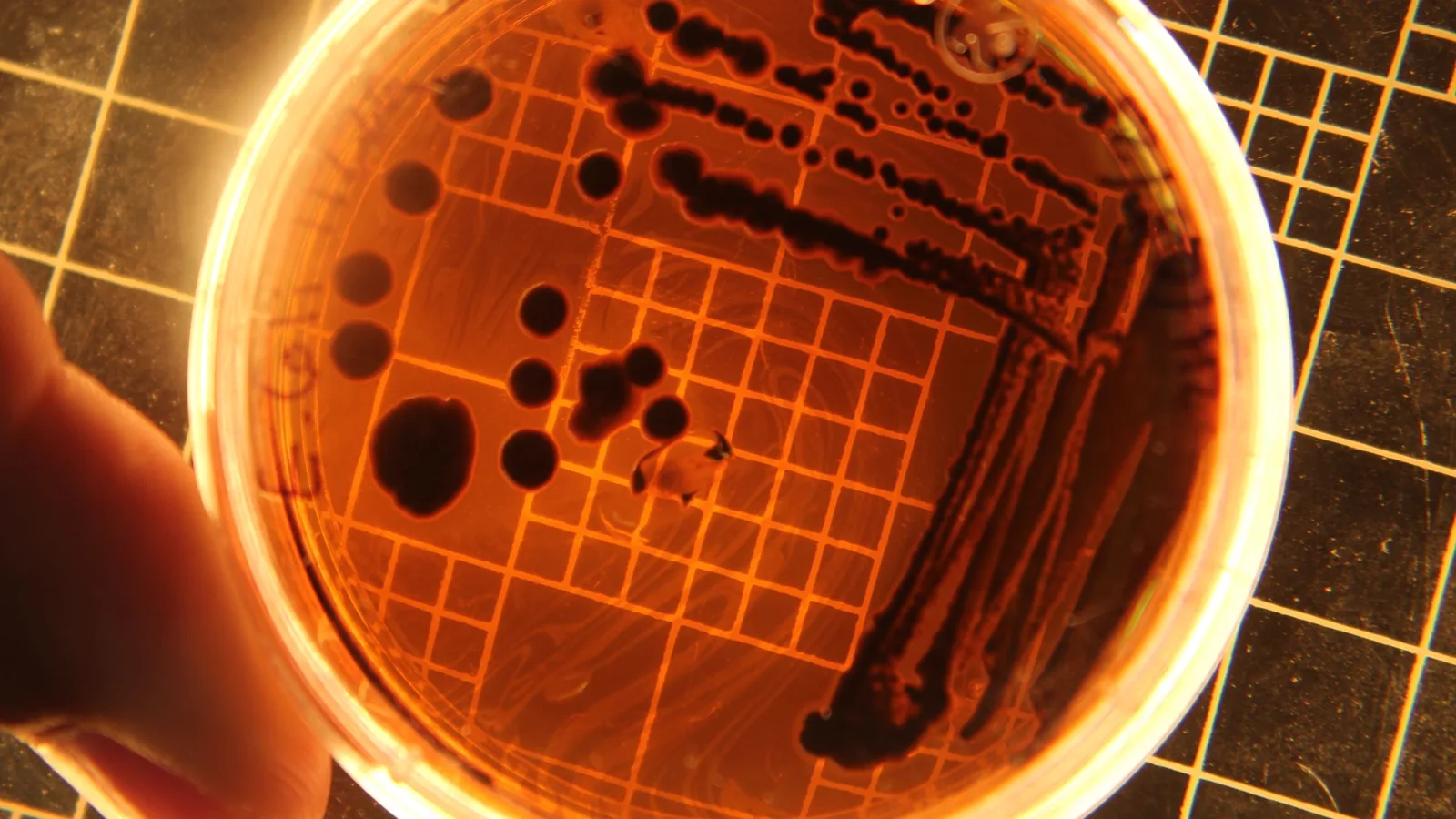
Antibiotics are among the greatest life-saving tools in the history of medicine. They are also among the most casually handed out. Both of those sentences are true, and they belong in the same paragraph.
The conversation that usually goes missing is not whether to take them. It is what the tradeoff actually costs, so that saying yes means something.
First, the part nobody should argue with
There are situations where an antibiotic is not a choice to weigh. Sepsis and septic shock. Bacterial meningitis. Severe pneumonia. A soft tissue infection that is spreading. Surgical prophylaxis where it is indicated.
In sepsis specifically, the international guidance is to give appropriate antimicrobials promptly, then reassess daily and narrow or stop as the picture clarifies (Evans et al., Surviving Sepsis Campaign, Critical Care Medicine, 2021). Promptly means hours, not a wait-and-see week.
Denying that reality is not natural. It is negligence in spiritual clothing.
That line is in here on purpose, because this site is read by people who are rightly sceptical of how medicine is sold, and scepticism pointed at the wrong target gets somebody killed. A healing centre that talked a patron out of antibiotics for a real infection would not be brave. It would be dangerous.
Now the cost, which is also real
Resistance is not a future problem. The CDC estimates more than 2.8 million antimicrobial-resistant infections in the United States every year, with more than 35,000 deaths as a result. Counting every threat in that report, including Clostridioides difficile, the US toll exceeds 3 million infections and 48,000 deaths a year.
The global picture is larger again. A systematic analysis covering 204 countries, 23 pathogens and 88 pathogen-drug combinations estimated 1.27 million deaths attributable to bacterial resistance in 2019, and 4.95 million deaths associated with it (Antimicrobial Resistance Collaborators, The Lancet, 2022).
Those two words are doing different jobs, and the difference is worth ten seconds. Attributable asks what would have happened if the bug had been treatable. Associated asks what would have happened if the person had not been infected at all. The first is the stricter number, and even the strict number puts resistance among the leading causes of death on earth.
The class matters more than most people are told
Not every antibiotic carries the same risk of C. difficile, the gut infection that can follow when the normal residents get cleared out and one toxin-producing organism takes the empty room.
A meta-analysis of community-associated cases pooled seven observational studies and compared each drug class against no antibiotic exposure at all (Brown et al., Antimicrobial Agents and Chemotherapy, 2013):
| Antibiotic class | Odds of C. difficile vs no antibiotic |
|---|---|
| Clindamycin | 16.80 (7.48 to 37.76) |
| Cephalosporins, monobactams, carbapenems | 5.68 (2.12 to 15.23) |
| Fluoroquinolones | 5.50 (4.26 to 7.11) |
| Penicillins | 2.71 (1.75 to 4.21) |
| Macrolides | 2.65 (1.92 to 3.64) |
| Sulfonamides and trimethoprim | 1.81 (1.34 to 2.43) |
| Tetracyclines | 0.92 (0.61 to 1.40) |
Read the top and the bottom of that table together. Clindamycin sits nearly eighteen times higher than no antibiotic. Tetracyclines show no effect at all, with a confidence interval sitting squarely across 1.
The authors’ own conclusion was that choosing a lower-risk class over a higher-risk one, where both would work, may reduce how often this happens. That is a conversation a prescriber can have in about forty seconds, and almost nobody asks for it.
What a course does to the ecosystem
Here is the finding that changed how we think about this, and it involves only three people.
Researchers tracked the gut bacteria of three individuals across 10 months, spanning two separate courses of ciprofloxacin, analysing more than 1.7 million bacterial gene sequences from 52 to 56 stool samples per person (Dethlefsen and Relman, PNAS, 2011).
The effect was fast. Diversity dropped and the community shifted within 3 to 4 days of starting the drug. Within a week of finishing, things began moving back toward where they had been.
But the return was often incomplete. By the end of the study every person’s gut had settled into a stable state again, and in each case it was a different state from the one they started in.
Three people is three people, and nobody should build a worldview on it. What makes it worth knowing is the shape of the result rather than its size: the gut is an ecosystem, and ecosystems do not always return to exactly where they were after you clear them out. They find a new normal.
The tradeoffs in plain words
| What happens | What it means for you |
|---|---|
| Resistance | Bugs adapt. The person who pays may be you next year, or somebody else |
| C. difficile | Competitors cleared, one organism takes over, and the diarrhoea can hospitalise |
| Microbiome disruption | Diversity drops fast and may not fully return |
| Drug-specific harms | Rash, tendon problems with some fluoroquinolones, interactions |
None of that is an argument for refusing a needed antibiotic. It is an argument for knowing whether this one is needed.
Where the design shows up
The thing an antibiotic does is not precision work. It is weather.
A broad-spectrum drug does not know which bacteria you wanted gone. It arrives in a system containing trillions of organisms, most of them doing useful work training your immune system and crowding out the ones that would hurt you, and it clears a large portion of them because that is what it was built to do. The infection dies. So does a lot of the neighbourhood.
Which is exactly why the tool is miraculous in a crisis and expensive in a sniffle. The same property that makes it save a life on Tuesday is the property that makes it a poor answer to a virus on Thursday.
“A time to tear down and a time to build up.” Ecclesiastes 3:3, NASB
The verse carries the conviction. Seven pooled studies and three sequenced guts carry the tradeoff.
The four questions to ask before you fill it
For a mild illness, where there is time to ask. Not for a high fever with confusion, not for a spreading red line up a limb, and not for a sick child. Those are phone-the-doctor-now situations.
- Is this bacterial or viral, and how do we know? Most sore throats, coughs and sinus complaints are viral, and an antibiotic does nothing to a virus except cost you the tradeoff above.
- What is the absolute benefit of treating this now? Not whether it might help. How many days shorter, and how likely.
- Is there a narrower drug that would work? Given the table above, which class, and why that one.
- What is the wait-and-see plan? Some prescribers will write a prescription to fill only if things are not better in 48 hours. That is a real option and it is worth asking for by name.
Then, if the answer is yes, take the full course as prescribed. Do not stop early on your own because you feel better. The questions above belong before the prescription, not halfway through one.
What to do afterward
There is no proven protocol for rebuilding a gut after antibiotics, and anyone selling you one is ahead of the evidence. What there is, is the ordinary thing: feed the organisms you want to keep.
That means plant-forward whole foods with real fibre in them, which is what gut bacteria actually eat, across a wide variety rather than the same three vegetables. Beans, whole grains, greens, onions, garlic. Sleep, because the whole system runs worse without it.
Fermented foods are the other obvious question, and we have written up what the trials do and do not show in the fermented foods evidence. If you are high risk or immunocompromised, raise probiotics with your clinician rather than with a shop assistant.
Read this next: how a side effect becomes a second prescription nobody intended: the prescribing cascade. What a new drug’s benefit actually adds up to, and how to ask: new cancer drugs added a median of 2.4 months. Why the famous medical-error death toll does not survive scrutiny: one Johns Hopkins estimate ranks this killer third. And the list worth carrying into a hospital stay: nearly 1 in 4 hospital stays had an adverse event.
Sources
- Centers for Disease Control and Prevention. “Antimicrobial Resistance Threats Report.” https://www.cdc.gov/antimicrobial-resistance/data-research/threats/index.html
- Antimicrobial Resistance Collaborators. “Global burden of bacterial antimicrobial resistance in 2019: a systematic analysis.” The Lancet, 2022;399(10325):629-655. https://pubmed.ncbi.nlm.nih.gov/35065702/
- Brown KA, Khanafer N, Daneman N, Fisman DN. “Meta-analysis of antibiotics and the risk of community-associated Clostridium difficile infection.” Antimicrobial Agents and Chemotherapy, 2013;57(5):2326-2332. https://pubmed.ncbi.nlm.nih.gov/23478961/
- Dethlefsen L, Relman DA. “Incomplete recovery and individualized responses of the human distal gut microbiota to repeated antibiotic perturbation.” Proceedings of the National Academy of Sciences, 2011;108 Suppl 1:4554-4561. https://pubmed.ncbi.nlm.nih.gov/20847294/
- Evans L, Rhodes A, Alhazzani W, et al. “Surviving Sepsis Campaign: International Guidelines for Management of Sepsis and Septic Shock 2021.” Critical Care Medicine, 2021;49(11):e1063-e1143. https://pubmed.ncbi.nlm.nih.gov/34605781/
Article metadata retrieved from PubMed. Resistance burden figures from the CDC. Photograph from Pexels. Scripture quoted from the New American Standard Bible.
Educational content from True Health Solutions. We do not diagnose, treat, cure or prevent disease, and nothing here is a substitute for care from someone who knows your history. Infection emergencies need urgent clinical care, not an article.
Questions people ask
- How big is antibiotic resistance as a problem?
- The CDC estimates more than 2.8 million antimicrobial-resistant infections occur in the US each year and more than 35,000 people die as a result. Counting every threat in that report, including Clostridioides difficile, the US toll exceeds 3 million infections and 48,000 deaths. Globally, a Lancet analysis estimated 1.27 million deaths attributable to bacterial resistance in 2019.
- Which antibiotics carry the most C. difficile risk?
- A meta-analysis of community-associated cases found clindamycin had by far the highest odds, at 16.80 against no antibiotic exposure. Fluoroquinolones were 5.50 and the cephalosporin group 5.68. Penicillins were 2.71, macrolides 2.65, and tetracyclines showed no effect at 0.92.
- Does the gut recover after a course of antibiotics?
- Mostly, but not always completely. In a study tracking three people over 10 months across two courses of ciprofloxacin, gut diversity dropped within 3 to 4 days. Communities began returning within a week of finishing, but the return was often incomplete, and each person's gut stabilised in a state different from where it started.
- When are antibiotics clearly the right call?
- Sepsis and septic shock, bacterial meningitis, severe pneumonia, life-threatening soft tissue infection, and indicated surgical prophylaxis. In sepsis the guidance is to give appropriate antimicrobials promptly and then reassess and narrow. Refusing antibiotics in those situations is not natural living, it is a serious mistake.
- Should I stop a course early if I feel better?
- Not on your own. If the infection was real and a prescriber started a course, that decision belongs with them. This article is about the conversation before the prescription, not about abandoning one midway.
