
food · education ·
A Stanford Trial Put People On Fermented Foods For 17 Weeks. Gut Diversity Went Up
One randomised trial found rising microbiome diversity and falling inflammatory markers. Most fermented foods have never been tested in a trial at all.
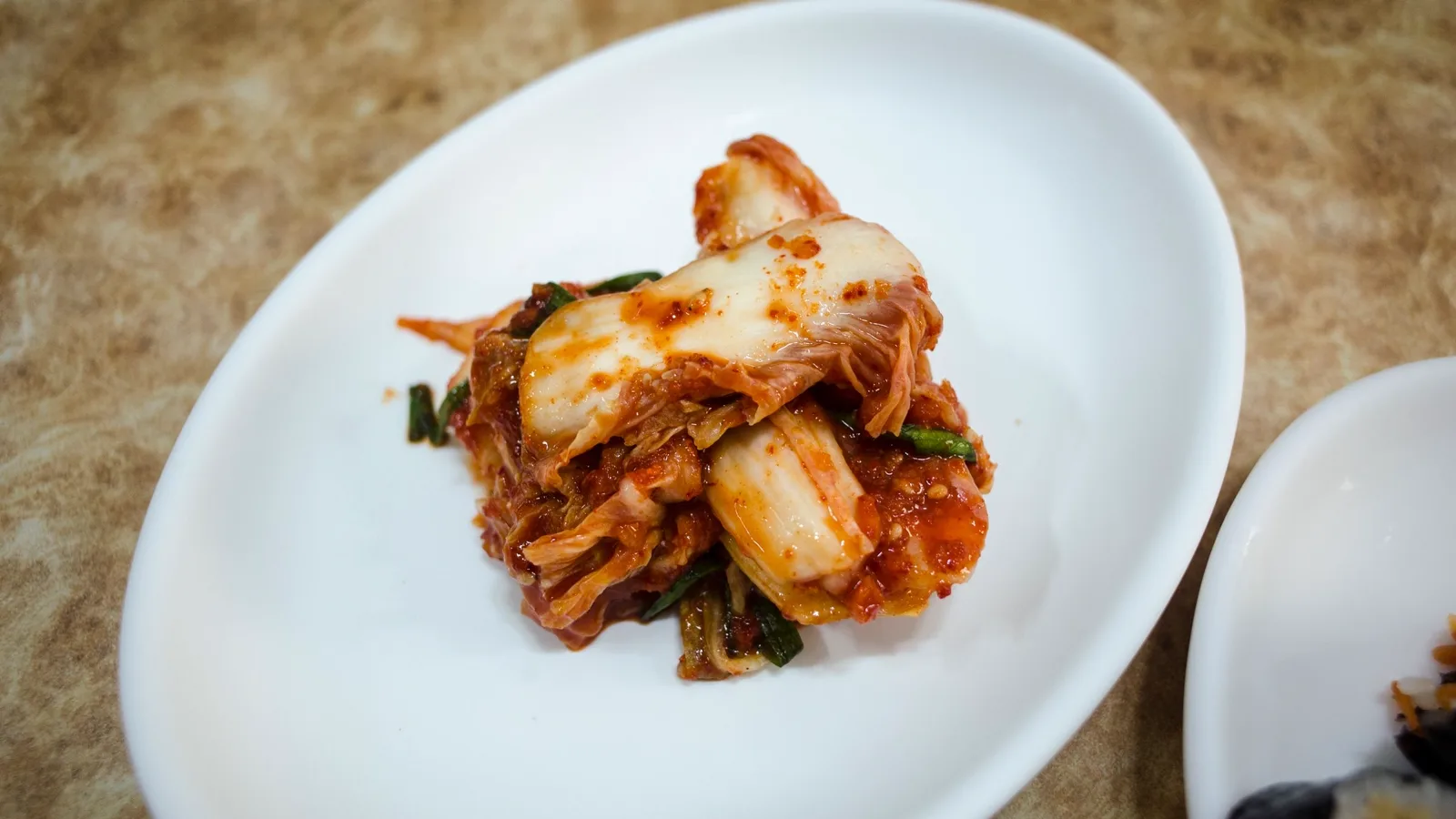
Fermented food has moved from the back of the fridge to the front of the health aisle in about a decade, and the claims attached to it have outrun the testing by a wide margin. There is one genuinely good trial, and knowing exactly what it found, and what it did not, is more useful than any amount of enthusiasm about kombucha.
The Stanford trial
Researchers ran a 17-week randomised, prospective study with 18 people per arm, comparing two microbiota-targeted diets against each other: a high-fibre diet and a high-fermented-food diet, with extensive immune and microbiome profiling throughout (Wastyk et al., Cell, 2021).
The high-fermented-food diet steadily increased microbiota diversity and decreased inflammatory markers. That is the result everybody quotes, and it is a real randomised finding rather than an observational association.
The high-fibre arm did something different and more complicated. It increased the microbiome’s glycan-degrading enzymes, the machinery for breaking down complex carbohydrates, while community diversity stayed stable. And the immune response split into three distinct trajectories that corresponded to what people’s microbiome diversity had been at the start, which is a reminder that the same diet does not land the same way in two different guts.
Now the half that rarely travels with it
The trial’s primary outcome was a cytokine response score, and it was unchanged.
That matters for how much weight the rest should carry. A primary outcome is the thing a study is designed and powered to detect, named in advance so that researchers cannot go fishing afterwards. When it does not move, the findings that did move are secondary: real measurements, worth taking seriously, and a weaker class of evidence than the headline implies.
So the honest sentence is that a well-designed trial found fermented foods raised gut diversity and lowered inflammatory markers, while the immune outcome it was built to test did not shift. Both halves are the trial.
Most fermented foods have never been tested
This is the part that surprised us, and it should change how you read any list of fermented superfoods.
A review of fermented foods and gastrointestinal health went looking for randomised controlled trials and found them for exactly four: kefir, sauerkraut, natto and sourdough bread (Dimidi et al., Nutrients, 2019). Kefir is the most investigated, with trial evidence suggesting benefit in lactose malabsorption and in eradication protocols.
For kombucha, miso, kimchi and tempeh, there were no randomised trials of gastrointestinal effects at all, despite extensive laboratory work on all of them.
There is very limited clinical evidence for the effectiveness of most fermented foods in gastrointestinal health and disease. Given the convincing in vitro findings, clinical high-quality trials investigating the health benefits of fermented foods are warranted.
Dimidi et al., Nutrients, 2019
Convincing in a dish, untested in a person. That is not a reason to stop eating kimchi, which people have eaten for centuries without needing a trial. It is a reason to notice that when somebody tells you what kombucha does to your gut, they are extrapolating from a petri dish.
The review also makes a point worth keeping: the proposed mechanisms are plural. Living microorganisms are one of them, but so are bioactive peptides produced during fermentation, the conversion of phenolic compounds into more active forms, and the reduction of anti-nutrients. Some of that survives whether or not the microbes are still alive by the time the food reaches your table.
Who should be careful
Fermented foods are histamine-rich, and histamine is handled by an enzyme called diamine oxidase. In people with reduced activity of that enzyme, dietary histamine accumulates faster than it clears, and the result can look remarkably like an allergic reaction: headache, flushing, diarrhoea, a blocked or running nose, low blood pressure, hives and itching (Maintz and Novak, American Journal of Clinical Nutrition, 2007).
If adding fermented foods has reliably made you feel worse in those specific ways, that is a recognised pattern and not fussiness. The review authors note that histamine intolerance has probably been underestimated precisely because the symptoms are so varied, and they call for proper double-blind provocation studies.
Alcohol and some medications also block that enzyme, which is why the same meal can land differently on different days.
What we are and are not saying
| Claim | Our line |
|---|---|
| Fermented foods treat, cure or prevent any condition | Never |
| A randomised trial found increased gut diversity on fermented foods | Yes, 18 per arm over 17 weeks |
| Inflammatory markers fell in that arm | Yes |
| The trial met its primary outcome | No. The cytokine response score was unchanged |
| Kombucha and kimchi have trial evidence for gut health | No randomised trials at the time of that review |
| Fermented foods suit everyone | No. Histamine intolerance is a real exception |
| More fermented food is always better | Untested. Nobody has run the dose study |
Where the design shows up
There is something worth noticing in the fact that fermentation is older than refrigeration, older than agriculture in some forms, and was never invented for health.
It was invented because food goes bad. Souring cabbage, milk and grain was how people kept a harvest alive through a winter, and the organisms doing the preserving happened to be the same ones that live in us. The health question is recent. The practice is as old as storing food at all.
Which is an argument for the ordinary version. A spoonful of something soured with most meals is what humans did for most of history, without measuring colony-forming units or buying anything with a label on it.
“And He said to them, Go, eat of the fat, drink of the sweet, and send portions to him who has nothing prepared.” Nehemiah 8:10, NASB
The verse carries the conviction. Eighteen people per arm carry the evidence.
What to do this week
Add one fermented thing to one meal a day and keep it cheap. Sauerkraut, kefir, plain live yoghurt and sourdough are the four with any trial evidence behind them, and the first two cost very little.
Start small if you are not used to it, because the most common experience is a few days of wind while things adjust, and the second most common is somebody deciding they are intolerant after one enthusiastic jar. If the specific histamine pattern above describes you, that is worth raising with somebody who knows your history rather than pushing through.
And buy the ones in the refrigerated section rather than the shelf-stable ones where that matters to you, since pasteurisation after fermentation kills the organisms even though some of the other benefits survive it.
Read this next: what fibre does further down, and why the colon is the organ in question: why fiber advice skips what your colon does. The food most reliably associated with the outcomes people want: beans, and why they keep showing up. And how we grade a field where laboratory findings outrun the trials: two of medicine’s top editors say you can’t believe much of it.
Sources
- Wastyk HC, Fragiadakis GK, Perelman D, et al. “Gut-microbiota-targeted diets modulate human immune status.” Cell, 2021;184(16):4137-4153.e14. https://pubmed.ncbi.nlm.nih.gov/34256014/
- Dimidi E, Cox SR, Rossi M, Whelan K. “Fermented Foods: Definitions and Characteristics, Impact on the Gut Microbiota and Effects on Gastrointestinal Health and Disease.” Nutrients, 2019;11(8):1806. https://pubmed.ncbi.nlm.nih.gov/31387262/
- Maintz L, Novak N. “Histamine and histamine intolerance.” The American Journal of Clinical Nutrition, 2007;85(5):1185-1196. https://pubmed.ncbi.nlm.nih.gov/17490952/
Article metadata retrieved from PubMed. Photograph from Pexels. Scripture quoted from the New American Standard Bible.
Educational content from True Health Solutions. We do not diagnose or prescribe, and nothing here is a substitute for care from someone who knows your history. The body heals. We write about what supports that design.
Questions people ask
- Do fermented foods actually change the gut?
- In a 17-week randomised trial at Stanford with 18 people per arm, a high-fermented-food diet steadily increased gut microbiota diversity and decreased inflammatory markers. That is a real controlled result, and it is one trial.
- Did everything in that trial work?
- No, and the honest reading needs both halves. The study's primary outcome was a cytokine response score, and it was unchanged. The diversity and inflammation findings came from the wider panel of measurements, not from the outcome the trial was designed around.
- What about fibre?
- The same trial ran a high-fibre arm. It increased the microbiome's glycan-degrading enzymes but community diversity stayed stable, and the immune response split into three different trajectories depending on what people's microbiome diversity was at the start.
- Which fermented foods have been tested?
- Very few. A review found kefir, sauerkraut, natto and sourdough bread had each been tested in at least one randomised trial for gastrointestinal effects. Kombucha, miso, kimchi and tempeh had none, despite extensive laboratory work.
- Who should be careful with fermented foods?
- People with histamine intolerance. Fermented foods are histamine-rich, and in people with reduced diamine oxidase activity that can produce symptoms including headache, flushing, diarrhoea and hypotension that mimic an allergic reaction.
