
education · food ·
How To Eat More Beans Without The Bloat (It Settles Faster Than You Think)
Three feeding studies put half a cup of beans on the plate daily for weeks and asked people what happened. The answer is not what the reputation suggests.
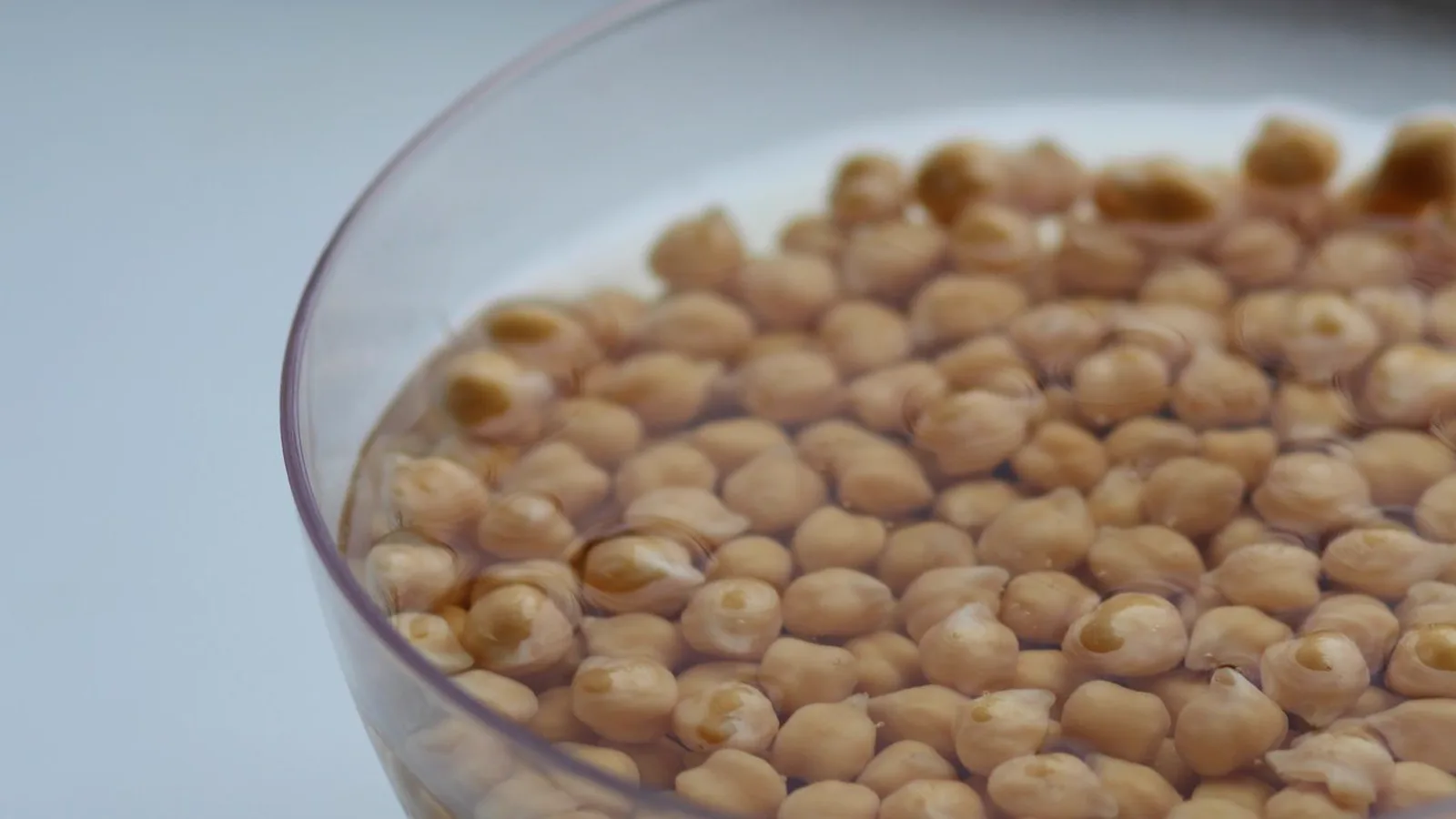
Researchers ran three separate feeding studies where people ate half a cup of beans every day for eight or twelve weeks. Every week, participants filled out the same questionnaire about gas, bloating and stool changes.
Some of those people were not eating beans at all. They were the control group, eating canned carrots or a control soup.
Between 3 and 11% of the control group reported increased flatulence anyway.
So what did the bean eaters report?
Less than you would guess from the reputation.
In the first week, which is the worst week, fewer than half of the people eating pinto beans or baked beans reported increased flatulence. For black-eyed peas it was 19% (Winham and Hutchins, Nutrition Journal, 2011).
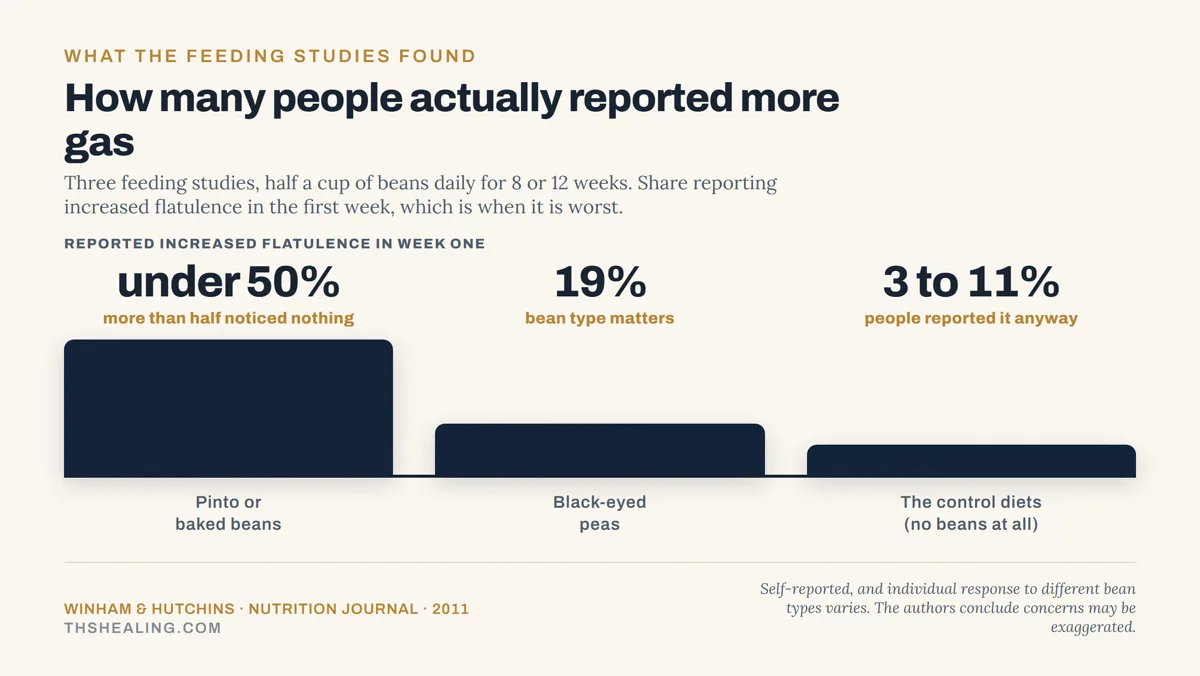
The authors’ own conclusion: people’s concerns about excessive flatulence from eating beans may be exaggerated.
Read the control group number again, because it is the most useful thing in the whole paper. Some people report gas no matter what they eat. Which means if you add beans and notice something, you cannot automatically assign the blame, and some portion of the bean reputation is people doing exactly that.
None of this is a promise about you specifically. The authors are clear that individual response varies, and it varies by bean type as much as by person. But the honest starting position is that the odds are better than the folklore suggests, and they improve after the first week.
What is actually happening down there
Beans carry oligosaccharides, a family of carbohydrates your small intestine does not fully break down. They continue into the colon, where bacteria ferment them.
That fermentation is not a malfunction. It is the same process we wrote about in the companion piece, the one producing the short-chain fatty acids that appear to be behind the next-morning blood sugar effect. Breath hydrogen went up 141% in that trial, which is the measurable signature of exactly this.
So the goal is not to eliminate fermentation. Eliminating it would mean throwing out the reason beans are worth eating. The goal is to arrive gently.
The kitchen protocol
1. Start smaller than your pride wants
Half a cup, a few times a week, then build. The studies used half a cup daily and the first week was the hardest. Sudden bean heroics are how people quit in week one and conclude they cannot tolerate beans.
2. For dry beans: soak, then throw the water away
This step has actual measurements behind it. In a processing study, soaking beans for 16 hours and discarding the unabsorbed soak water reduced raffinose by 25%, stachyose by 25% and verbascose by 42%, which are the three oligosaccharides most associated with gas (de Oliveira et al., Archivos Latinoamericanos de Nutrición, 2001).
The same study found soaking cut phytate content by 85%, and cooking cut tannins by 84%. Both of those interfere with mineral absorption, so this one step is doing more than comfort work.
Note what it measured: the beans, not anybody’s symptoms. It tells you the compounds go down. It does not tell you how any particular person feels.
The step people skip: discarding the water is the whole point. Cooking beans in their soak water puts back what you just pulled out.
3. For canned beans: rinse like you mean it
Canned beans are already cooked. Drain them and rinse under cold water until the foam runs clear. That packing liquid is salty and carries fermentable material along with it.
4. Cook them until they are truly soft
Undercooked beans are harder on everybody. If they still have a chalky center, they are not done.
5. Cook with aromatics
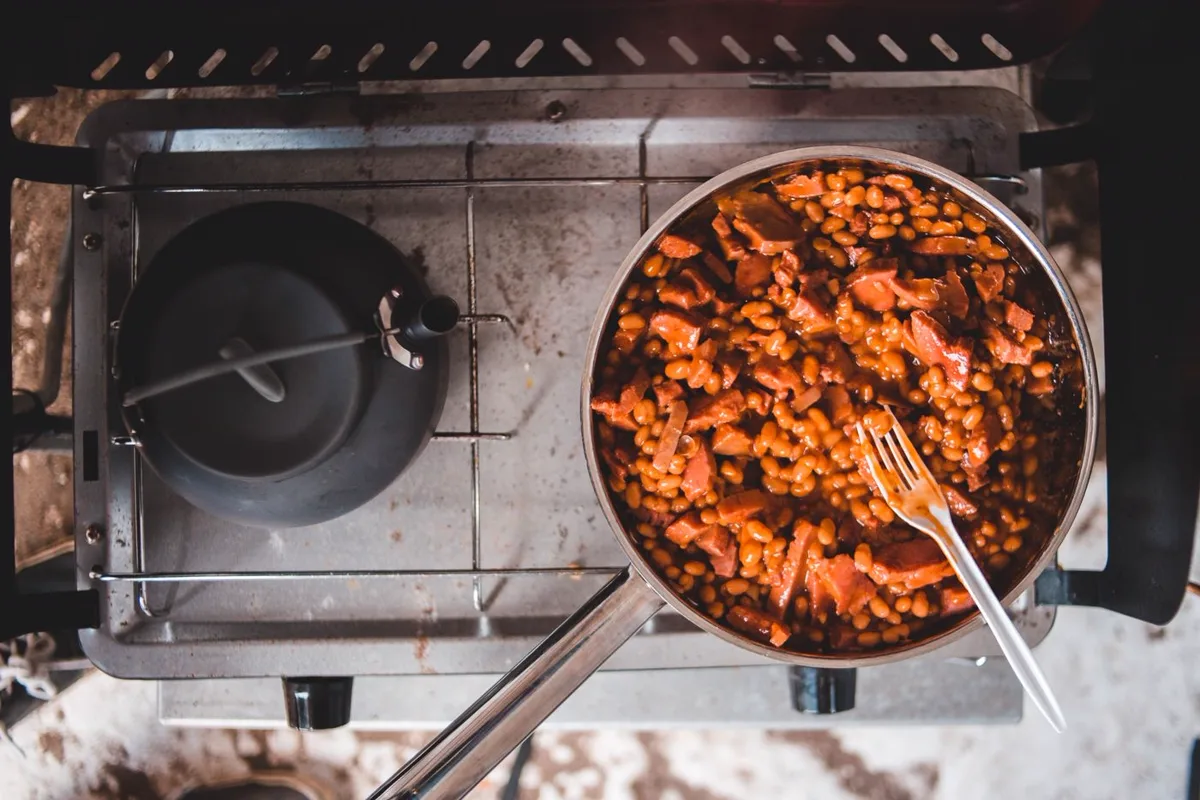
Onion, garlic, bay, cumin, fennel, ginger, oregano. Kitchen traditions across the world pair beans with these, and we are going to be straight with you: the evidence that they reduce gas is thin. What they reliably do is make a plate people finish, which matters more than it sounds, because the habit is the thing that has to survive.
6. Chew. Do not inhale.
Speed-eating a bowl is a different experiment than the ones in the papers.
What this is not
This is not a promise you will never notice fermentation. It is a way to keep a habit long enough for the reasons behind it to matter.
And if you genuinely cannot tolerate beans after a fair try, that is real information about your body, not a failure of willpower. Lentils and split peas are often easier. Start there instead.
Where the design shows up
The discomfort and the benefit come from the same place. That is worth sitting with for a second. The part of the bean your body cannot use by itself is precisely the part that feeds the bacteria you host, and their byproducts are what show up in your blood the next morning.
You could read the gas as a design flaw. We read it as evidence that something is being handed off to somebody else living inside you, exactly as intended, and that the handoff gets smoother with practice.
Read this next: the reason any of this is worth the trouble is in the companion piece: what you eat at dinner is still working at breakfast the next morning, where a bean dinner cut the next morning’s blood sugar response by 15%. Beans sit inside pillar two of The Five Pillars of Owning Your Health.
Sources
- Winham DM, Hutchins AM. “Perceptions of flatulence from bean consumption among adults in 3 feeding studies.” Nutrition Journal, 2011;10:128. https://pubmed.ncbi.nlm.nih.gov/22104320/
- de Oliveira AC, Queiroz KS, Helbig E, Reis SM, Carraro F. “The domestic processing of the common bean resulted in a reduction in the phytates and tannins antinutritional factors, in the starch content and in the raffinose, stachiose and verbascose flatulence factors.” Archivos Latinoamericanos de Nutrición, 2001;51(3):276-283. https://pubmed.ncbi.nlm.nih.gov/11795242/
- Nilsson A, Johansson E, Ekström L, Björck I. “Effects of a brown beans evening meal on metabolic risk markers and appetite regulating hormones at a subsequent standardized breakfast: a randomized cross-over study.” PLoS One, 2013;8(4):e59985. https://pubmed.ncbi.nlm.nih.gov/23577078/
- Higgins JA. “Whole grains, legumes, and the subsequent meal effect: implications for blood glucose control and the role of fermentation.” Journal of Nutrition and Metabolism, 2012;2012:829238. https://pubmed.ncbi.nlm.nih.gov/22132324/
Article metadata retrieved from PubMed.
Educational content from True Health Solutions. We do not diagnose or prescribe, and nothing here is a substitute for care from someone who knows your history. The body heals. We write about what supports that design.
Questions people ask
- Do beans really cause that much gas?
- Less than most people expect. Across three feeding studies of half a cup of beans daily, fewer than half of participants reported increased flatulence in the first week on pinto or baked beans, and only 19% on black-eyed peas. Between 3 and 11% reported it on the control diets that contained no beans at all.
- Does it get better if I keep eating them?
- The first week was the worst week in these studies, and reports fell after it. Individual response varies by person and by bean type, which the authors were careful to note.
- Does soaking dry beans actually help?
- Soaking and discarding the unabsorbed soak water reduced the oligosaccharides associated with gas: raffinose down 25%, stachyose down 25%, verbascose down 42% in one processing study. That study measured the beans, not anybody's symptoms.
- Do I need to soak canned beans?
- Canned beans are already cooked, so no soaking. Drain and rinse them well to wash off the packing liquid.
- Which beans are easiest to start with?
- In the feeding studies, black-eyed peas produced the fewest reports of increased gas, at 19% versus under 50% for pinto and baked beans. Lentils are also commonly tolerated well because they are small and cook soft.
