
education ·
Light In The Bedroom At Night Tracked With Worse Metabolic Markers (& Tonight's Free Fix)
Any light at all during the darkest five hours tracked with higher odds of obesity, diabetes and high blood pressure in 552 older adults. The fix is free.
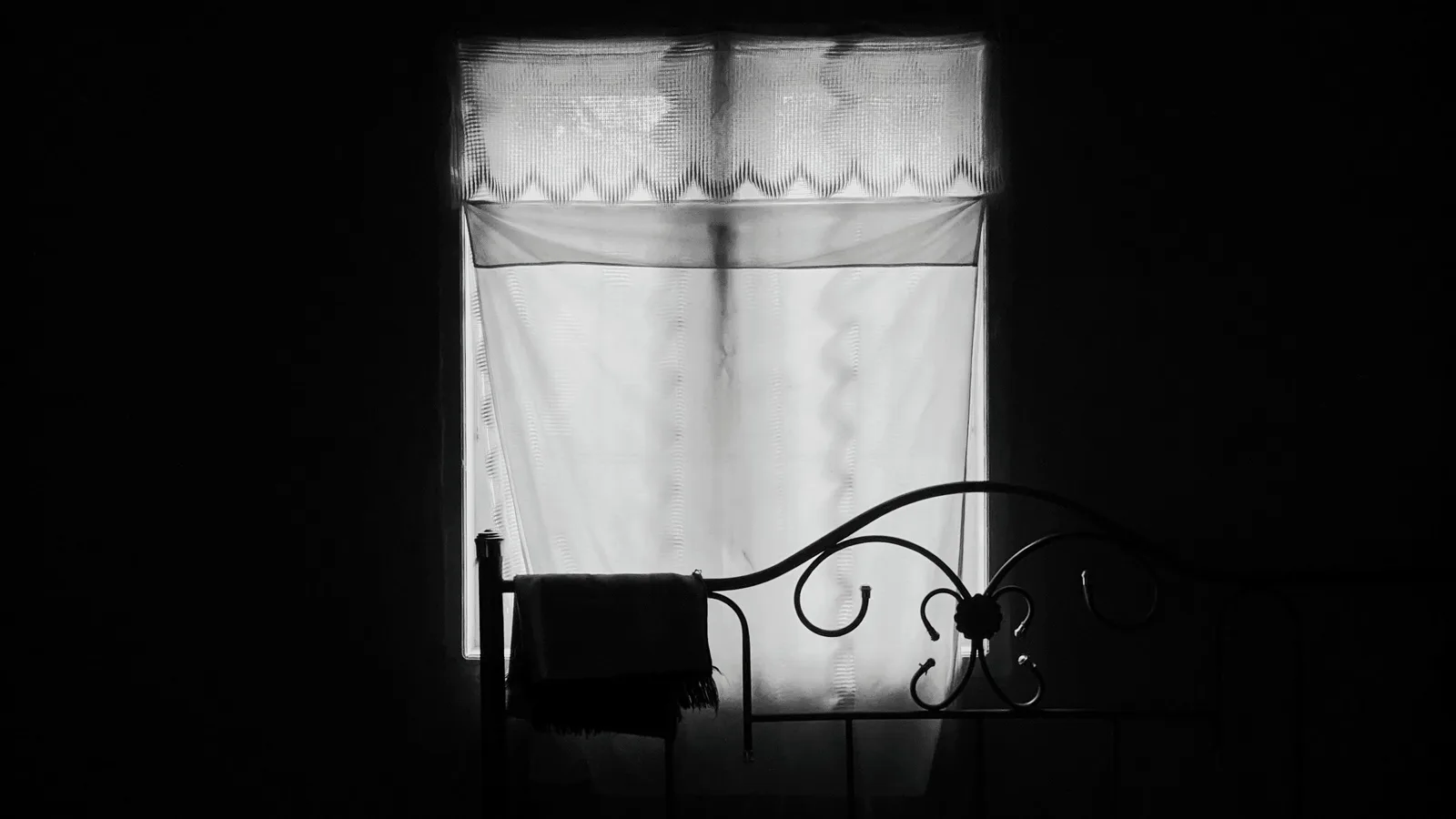
The hallway night-light. The charger LED. The streetlamp through a thin curtain. The television left on standby across the room.
Researchers put light meters on 552 older adults for a week and found that whether any of that was present during their darkest hours tracked with some things nobody expects a light bulb to be involved in.
The finding
Participants were 552 community-dwelling adults aged 63 to 84, who had a cardiovascular risk factor examination and then wore an actigraphy device for 7 days recording both movement and light (Kim et al., Sleep, 2023).
The measure was deliberately crude, and that is what makes it interesting. Researchers found each person’s five darkest, stillest hours, then split everyone into two groups: any light at all during that window, or none. Not bright light. Any.
After adjusting for age, sex, race, season of recording and sleep variables:
| Condition | Odds with light at night |
|---|---|
| Obesity | 1.82 (95% CI 1.26 to 2.65) |
| Diabetes | 2.00 (1.19 to 3.43) |
| Hypertension | 1.74 (1.21 to 2.52) |
| High cholesterol | Not significantly associated |
People with light at night also showed later timing of their darkest and least active hours, less day-to-day consistency in their light and activity rhythms, and more time awake after falling asleep.
That last row is worth pausing on. Cholesterol did not move. If this were a general “sicker people look worse on everything” artefact, you would expect it to.
The bigger pool
One study of 552 people is a start. A meta-analysis published the following year pooled 14 studies covering 1,019,739 participants, five of them cohort studies and nine cross-sectional (Xu, Zhang and Ding, Environmental Pollution, 2024).
Higher light-at-night exposure was associated with 21% higher risk of cardiometabolic disease overall (summary risk ratio 1.21, 95% CI 1.16 to 1.27). Broken out: 23% higher for obesity and 46% higher for diabetes.
Two things in that review matter more than the headline number. Heterogeneity was substantial, with an I² of 61%, meaning the studies disagreed with each other quite a lot. And the diabetes estimate rests on only four studies, with a confidence interval whose lower bound is 1.05, close enough to 1 to stay humble about.
The subgroup finding is the practically useful one. Indoor light at night pooled higher than outdoor light at night, 1.36 against 1.17, and that difference itself reached significance. Which is convenient, because the light inside your bedroom is the one you can do something about tonight.
Overall certainty across the review was graded moderate.
Somebody ran the experiment
Observational evidence can only take you so far, so it matters that light timing has also been tested under controlled conditions.
Fourteen overweight, insulin-resistant volunteers each spent two 40-hour sessions in a metabolic chamber, in a randomised crossover, under two different lighting schedules. One was bright light during the day and dim light in the evening. The other was the reverse: dim all day, bright in the evening (Harmsen et al., Diabetologia, 2022).
Light timing changed real measurements. Evening bright light strongly suppressed melatonin, where the dim evening did not. Sleeping metabolic rate stayed level after the bright-day schedule and dropped after the bright-evening one. Skin temperature patterns separated too.
Then the part that keeps this honest, because it does not line up neatly with the story above. Postprandial glucose after dinner was actually lower on the bright-evening schedule, not higher. Fasting and post-meal insulin showed no difference between the two at any point.
So the experiment confirms that the light environment reaches metabolism and the body clock. It does not confirm that every form of evening or night light pushes glucose the wrong way. Fourteen people, two days each, and a result with arrows pointing in more than one direction.
What this is not
This is observational evidence throughout, and the honest version has a specific weakness worth naming rather than waving at.
The Kim study measured light and measured conditions at the same time. It cannot tell you which came first. And there is an obvious way the arrow could run backwards: somebody with poorly controlled diabetes gets up three times a night to use the bathroom and switches on a light each time. Somebody with untreated sleep apnoea sleeps badly and reaches for a phone at 3am. Both of those people now register as “light at night” because of a condition they already had.
The researchers adjusted for sleep variables, which helps. It does not eliminate it. Their own conclusion asks for longer-term work, and they are right to.
So nobody should read this and conclude a night-light gave them diabetes. What the evidence supports is that darkness during sleep is worth protecting, not that light caused anything in particular.
Where the design shows up
Nearly every cell in your body keeps time. Not as a metaphor, as actual machinery: genes that switch on and off across roughly 24 hours in your liver, your fat tissue, your pancreas, your blood vessels.
Those clocks need a signal to stay set, and the main one is light. For every generation before the last handful, that signal was unambiguous. Bright meant day. Dark meant night. There was no third category, and a clock set by that could run the whole system against it: when to release insulin, when to raise blood pressure for the morning, when to be hungry.
A dim glow at 2am is a new thing in a very old system. It is not bright enough to be day, and it is not nothing. Whether that genuinely matters for metabolism at the scale of a charger LED is exactly what the research above has not settled.
But the design argument runs the right way for once. Night was dark for the entire history of every creature with a clock in its cells, and the burden of proof sits with the light.
“And God separated the light from the darkness.” Genesis 1:4, NASB
The verse carries the conviction. Five hundred and fifty-two light meters and a million pooled participants carry the association.
What to do tonight
The whole reason this article exists is that the intervention is free, immediate, and carries no downside. You do not need to wait for the trial.
Deal with the obvious emitters first. A strip of electrical tape over the charger and power strip LEDs. The television off at the wall rather than on standby. The phone face down, or better, charging in another room. These take four minutes once and then they are done forever.
Then the window. A blackout curtain if a streetlamp or a security light reaches your bed. A cheap eye mask does the same job for a fraction of the price and travels, which makes it the better first try.
Then the hallway. This is the one with a real trade-off, and we are not going to pretend otherwise. If somebody in the house gets up at night and a dark hallway means a fall risk, the night-light stays. A fall in your seventies is a far more certain harm than anything in this article. Put it low to the floor, make it as dim as it can be, and keep it out of the line of sight from the bed.
And if you are getting up repeatedly at night, that is the thing to chase. Not the bulb. Frequent night waking has causes worth finding, and the study above is a decent argument for mentioning it at your next appointment rather than accepting it as what getting older feels like.
Read this next: the other half of the light story, and the one with trial evidence behind it: morning daylight worked as well as melatonin. What four short nights did to how the body handles sugar: four short nights and your fat cells. And the supplement most often reached for instead: what the magnesium and sleep trials found.
Sources
- Kim M, Vu TH, Maas MB, et al. “Light at night in older age is associated with obesity, diabetes, and hypertension.” Sleep, 2023;46(3):zsac130. https://pubmed.ncbi.nlm.nih.gov/35729737/
- Harmsen JF, Wefers J, Doligkeit D, et al. “The influence of bright and dim light on substrate metabolism, energy expenditure and thermoregulation in insulin-resistant individuals depends on time of day.” Diabetologia, 2022;65(4):721-732. https://pubmed.ncbi.nlm.nih.gov/35106618/
- Xu YX, Zhang JH, Ding WQ. “Association of light at night with cardiometabolic disease: A systematic review and meta-analysis.” Environmental Pollution, 2024;342:123130. https://pubmed.ncbi.nlm.nih.gov/38081378/
Article metadata retrieved from PubMed. Photograph from Pexels. Scripture quoted from the New American Standard Bible.
Educational content from True Health Solutions. We do not diagnose, treat, cure or prevent disease, and nothing here is a substitute for care from someone who knows your history. The body heals. We write about what supports that design.
Questions people ask
- What did the study actually measure?
- 552 community-dwelling adults aged 63 to 84 wore an actigraphy device for 7 days that recorded both activity and light. Researchers looked at the 5-hour stretch with the least light and activity, and split people simply into any light versus no light during that window.
- What were the odds?
- After adjusting for age, sex, race, season of recording and sleep variables, light at night was associated with higher prevalence of obesity at odds ratio 1.82, diabetes at 2.00, and hypertension at 1.74. Hypercholesterolemia was not significantly associated.
- Does this prove light causes these conditions?
- No. It is a prevalence study measuring light and conditions at the same time, so it cannot establish direction. Someone getting up repeatedly at night because of a health problem will also record more light at night, which would produce this result with cause running backwards.
- Is there larger evidence?
- A 2024 meta-analysis pooled 14 studies covering 1,019,739 participants and found higher light-at-night exposure associated with 21% higher risk of cardiometabolic disease overall, 23% higher for obesity and 46% higher for diabetes. Heterogeneity was substantial and the overall certainty was rated moderate.
- Is indoor or outdoor light the bigger signal?
- Indoor. In that meta-analysis the pooled effect was higher for indoor light at night than outdoor, 1.36 against 1.17, with the subgroup difference reaching significance at P equals 0.03. The light inside your room is the part you control.
