
food · education · heart ·
Nuts Improved Artery Function In Pooled Trials. Then The Subgroup Analysis Named One Nut
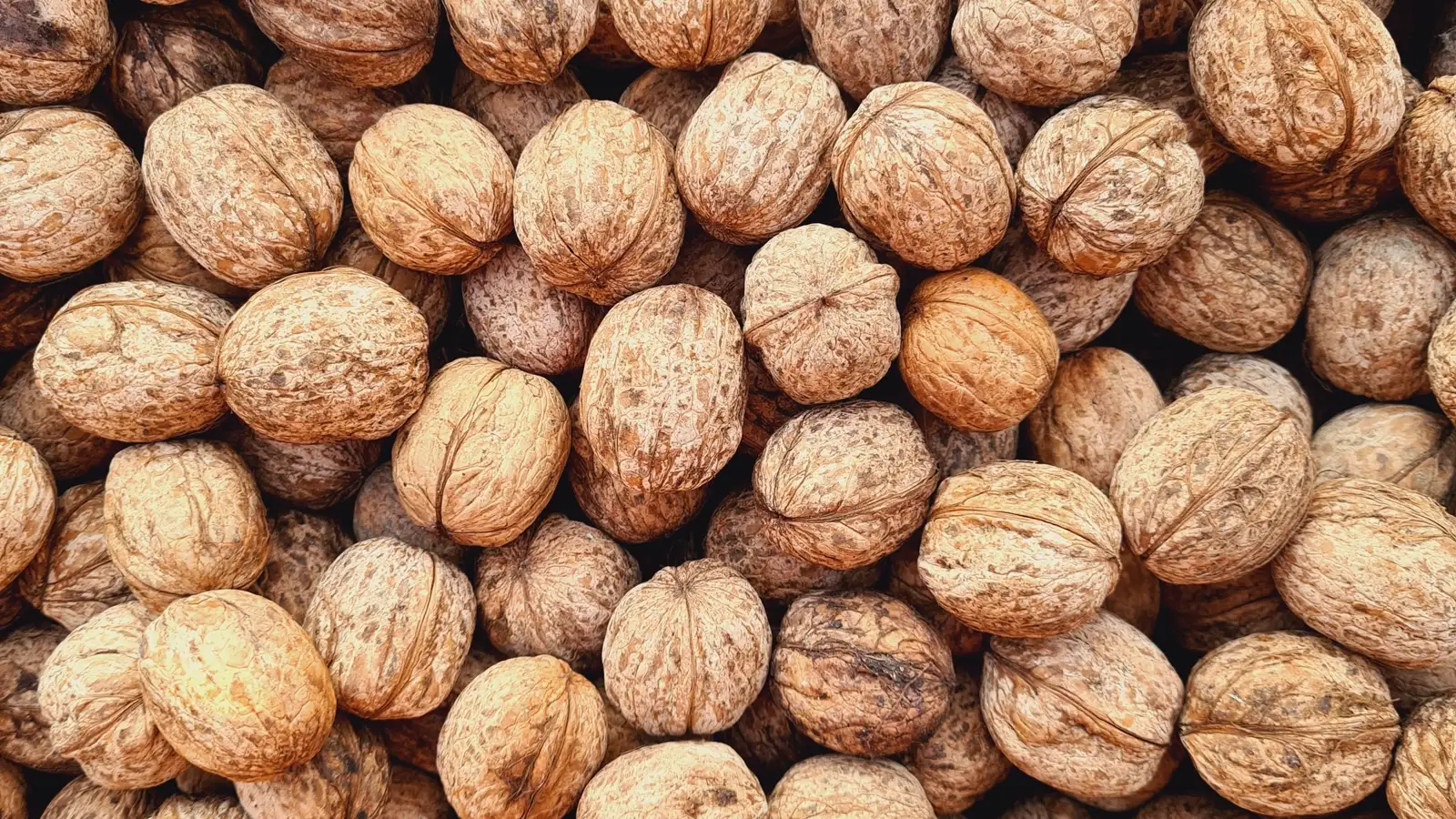
Ten trials found nut eating improved how arteries dilate. When researchers looked at which nuts, the significant effect was limited to walnuts.
Most nutrition findings are about what happens to a number on a lab report. This one is about what happens to an artery while you are watching it.
And it comes with an unusually specific punchline, which the people who pooled the data were honest enough to put in their own conclusion.
What gets measured
Flow-mediated dilation is a test where an ultrasound probe watches an artery in your arm. Blood flow is briefly cut off with a cuff, then released, and a healthy artery widens in response.
The widening is produced by the endothelium, the single layer of cells lining every blood vessel you have. When that lining is working, it releases nitric oxide and the vessel opens. When it is not, the vessel responds poorly. Endothelial dysfunction shows up early in cardiovascular disease, which is why this measure is used as a prognostic marker rather than just a curiosity.
So an intervention that moves flow-mediated dilation is doing something to the lining of your blood vessels. That is a more interesting claim than moving a cholesterol number.
The pooled result
Researchers gathered the randomized trials of nut eating and flow-mediated dilation: nine papers reporting 10 trials, 374 adults (Xiao et al., Clinical Nutrition, 2017).
Nut consumption significantly improved flow-mediated dilation by a weighted mean difference of 0.41 percentage points (95% CI 0.18 to 0.63, P = 0.001), with moderate heterogeneity.
Then the subgroup analysis, and the sentence the authors chose to end on:
Nut consumption significantly improved endothelial function. However, the beneficial effect was limited to walnuts.
Xiao et al., Clinical Nutrition, 2017
Walnuts specifically improved the measure by 0.39 percentage points (95% CI 0.16 to 0.63, P = 0.001).
Read that carefully, because it is easy to over-read. “Limited to walnuts” in a subgroup analysis means the significant signal was found in walnut trials. It does not mean almonds and pistachios were tested and failed. It largely means walnuts are what got studied, which is a different and much more common situation than people realise.
Three other conditions came with the effect: it showed up in trials shorter than 18 weeks, at doses under 67 grams a day, and in people whose baseline dilation was already 8.6% or higher.
A second, larger pooling, and a mechanism ruled out
A different group asked a sharper question. Nuts contain L-arginine, which the body uses to make nitric oxide, which is what dilates the vessel. So is the nut effect just an arginine effect?
They pooled 13 randomized trials of tree nuts and groundnuts against 19 trials of L-arginine supplementation (Smeets, Mensink and Joris, Clinical Nutrition, 2020).
| Intervention | Change in fasting flow-mediated dilation |
|---|---|
| Tree nuts and groundnuts | +1.09 percentage points (95% CI 0.49 to 1.69, P < 0.001) |
| L-arginine supplement, 3 to 21 g daily | +0.53 percentage points (95% CI 0.12 to 0.93, P = 0.012) |
The difference between the two was not statistically significant, so this is not a knockout. But the authors’ conclusion is the interesting part: the positive effects of nuts could not be fully explained by the amount of L-arginine in these nuts.
Something else in the whole food is doing work that the isolated amino acid does not reproduce. That is the same shape we keep running into on this site, and it is why we keep saying it: whole foods beat their own purified extracts.
They also found nuts did not significantly change dilation in the hours after a meal, while arginine did. Different compounds, different time courses. The authors describe the overall evidence as high quality.
Where this started
The trial underneath the walnut signal is worth naming, because it is a clean design from 2004.
Twenty-one hypercholesterolemic men and women were randomised in a crossover to two diets: a cholesterol-lowering Mediterranean diet, and the same diet with walnuts replacing about 32% of the energy from monounsaturated fat. Four weeks on each (Ros et al., Circulation, 2004).
Against the control Mediterranean diet, the walnut diet improved endothelium-dependent vasodilation and reduced vascular cell adhesion molecule-1, a marker of vessel wall inflammation. Total cholesterol fell 4.4% and LDL 6.4%.
Note what did not change: endothelium-independent vasodilation was the same on both diets. That matters, because it means the improvement was specific to the lining doing its job rather than the vessel simply being more relaxed overall. The mechanism points where the claim says it does.
Each person ate both diets, so each was their own control. Eighteen had usable ultrasound studies.
What we are and are not saying
| Claim | Our line |
|---|---|
| Nuts treat, cure or prevent heart disease | Never |
| Nut eating improved flow-mediated dilation | Yes, in 10 pooled trials and again in 13 |
| The effect was significant for walnuts specifically | Yes, and that is a subgroup finding |
| Other nuts have been shown not to work | No. Mostly they have not been tested this way |
| It is the arginine | Not fully. Nuts outperformed arginine supplements |
| More nuts is better | No evidence of that. The effect appeared under 67 g a day |
| This proves fewer heart attacks | No. Flow-mediated dilation is a marker, not an outcome |
The honest limit. Every number here is a surrogate measure. A better-dilating artery is a reasonable thing to want and it predicts risk, but no trial in this set followed anybody to a heart attack. The outcome evidence for nuts lives in separate cohort studies, with the usual caveats of cohort studies.
Where the design shows up
The endothelium is one cell thick. Laid flat, the lining of an adult’s blood vessels would cover something like a tennis court, and all of it is a single sheet of cells one layer deep.
That sheet decides, locally and continuously, how wide each vessel should be. Not the heart, not the brain. The pipe itself senses the flow across its own surface and opens to accommodate it.
Which means a blood vessel is not plumbing. It is a responsive organ distributed through every part of you, and it is apparently paying enough attention to what you ate this month to respond differently to a cuff on your arm.
“The life of the flesh is in the blood.” Leviticus 17:11, NASB
The verse carries the conviction. Three hundred and seventy-four adults carry the measurement.
What to do this week
Eat a handful of walnuts, most days, and stop there.
That is genuinely the whole intervention. The effect in the pooled trials appeared at under 67 grams a day, which is a generous handful, and it appeared within 18 weeks. Nothing in this literature rewards eating more.
Buy them in the shell or vacuum packed if you can. Walnuts carry a lot of polyunsaturated fat, which means they go rancid faster than other nuts, and a rancid walnut is both unpleasant and the opposite of what you bought it for. Keep them in the fridge or freezer once opened.
And if you dislike walnuts, do not force it. The honest reading of that subgroup analysis is that walnuts are the best-studied nut here, not the only one that could work, and the cohort evidence for nuts in general is broader than this particular measurement.
Read this next: the same pattern where whole food beat its own extract, across 46 trials: whole foods beat their own supplements. The nut with a dose ceiling rather than a floor: how many brazil nuts a day. And a food with harder outcome data behind it: beets lowered blood pressure in 22 trials.
Sources
- Xiao Y, Huang W, Peng C, et al. “Effect of nut consumption on vascular endothelial function: A systematic review and meta-analysis of randomized controlled trials.” Clinical Nutrition, 2017;37(3):831-839. https://pubmed.ncbi.nlm.nih.gov/28457654/
- Smeets ETHC, Mensink RP, Joris PJ. “Effects of tree nut and groundnut consumption compared with those of l-arginine supplementation on fasting and postprandial flow-mediated vasodilation: Meta-analysis of human randomized controlled trials.” Clinical Nutrition, 2020;40(4):1699-1710. https://pubmed.ncbi.nlm.nih.gov/32980186/
- Ros E, Núñez I, Pérez-Heras A, et al. “A walnut diet improves endothelial function in hypercholesterolemic subjects: a randomized crossover trial.” Circulation, 2004;109(13):1609-1614. https://pubmed.ncbi.nlm.nih.gov/15037535/
Article metadata retrieved from PubMed. Photograph from Pexels. Scripture quoted from the New American Standard Bible.
Educational content from True Health Solutions. We do not diagnose or prescribe, and nothing here is a substitute for care from someone who knows your history. The body heals. We write about what supports that design.
Questions people ask
- Do nuts improve blood vessel function?
- In a meta-analysis of 10 trials in 374 adults, nut consumption improved flow-mediated dilation by 0.41 percentage points. A larger analysis of 13 trials found a bigger effect of 1.09 percentage points on fasting measurements, described by its authors as high-quality evidence.
- Which nut?
- The subgroup analysis is blunt about it. Walnuts significantly improved the measure, and the authors concluded the beneficial effect was limited to walnuts. That is not evidence other nuts fail, it is evidence other nuts have barely been tested this way.
- What is flow-mediated dilation?
- A measure of how well an artery widens when blood flow increases, taken by ultrasound at the arm. It reflects the health of the endothelium, the single-cell lining of your blood vessels, and it predicts cardiovascular risk.
- Is it the arginine in nuts?
- Apparently not, or not only. Researchers compared nut trials against L-arginine supplement trials directly and found nuts raised fasting dilation more than arginine did, concluding the effect could not be fully explained by the arginine content.
- How many do I need to eat?
- The pooled effect appeared in trials using under 67 grams a day, which is roughly a generous handful or less. The walnut trial that started this line of research replaced about a third of the diet's monounsaturated fat energy with walnuts for four weeks.
