
food · education ·
Not All Olive Oil Is The Same Food. Here's What The Phenolic Dose Changed
Three oils, identical in fat, different in phenolics. A 200-man trial found the markers moved with the dose. A newer trial found a limit worth knowing about.
The grocery aisle sells olive oil as though every bottle were the same food. The research says the useful dividing line is not the fat at all, because almost every olive oil is mostly the same fat. It is the phenolics, the bitter plant compounds that survive in the oil only if nobody refines them out.
And somebody tested that properly, with three oils built to be identical except for one thing.
Three oils, one difference
Six research centres across five European countries ran a randomised crossover trial on 200 healthy men. Each man took 25 mL a day of three different olive oils, three weeks per oil, with two-week washouts between them. The oils were otherwise similar. What differed was phenolic content: low at 2.7 mg per kg, medium at 164, high at 366 (Covas et al., Annals of Internal Medicine, 2006).
HDL cholesterol rose after all three oils, and the size of the rise climbed with the phenolic dose: 0.025, 0.032 and 0.045 mmol/L across low, medium and high. That is worth saying carefully, because it cuts two ways. The fat itself did something. The phenolics did more.
Oxidised LDL went the other direction, which is the direction you want, and it also moved with the dose:
| Olive oil | Phenolics, mg/kg | Oxidised LDL, mean change |
|---|---|---|
| Low | 2.7 | +1.21 U/L |
| Medium | 164 | -1.48 U/L |
| High | 366 | -3.21 U/L |
Here is the honest fine print on that table, which the aisle version of this story leaves out. Only the high-phenolic result holds up on its own: its confidence interval ran from -5.1 to -0.8, which does not include zero. The low and medium figures both had intervals that crossed zero, meaning either could have been chance. What the paper reports is a significant linear trend across the three doses, not three separate wins.
That is still a real finding, and it is a stronger one than three isolated numbers would be, because a dose-response pattern is harder to get by accident than a single result. The authors’ own conclusion was that olive oil is more than a monounsaturated fat.
God put living phenolics in the fruit of the olive tree, not just oleic acid in a clear bottle.
The same lesson, two smaller trials
Two earlier studies from the same line of work got there first, on smaller numbers.
Thirty healthy volunteers went through a double-blind crossover with three olive oils ranging from 0 to 150 mg of phenolics per kg. Oxidised LDL in the blood fell and the resistance of LDL to oxidation in the lab rose, both tracking the phenolic content, and HDL cholesterol rose after the virgin oil (Marrugat et al., European Journal of Nutrition, 2004).
Then twelve men, on a deliberately very low-antioxidant diet so nothing else in their food could muddy it, took 25 mL a day of low, moderate or high phenolic oil for four days each. Oxidised LDL and three separate markers of oxidative damage fell in a dose-dependent pattern, and HDL cholesterol and glutathione peroxidase activity rose (Weinbrenner et al., Journal of Nutrition, 2004).
Twelve men for four days is a small, short study and we are not going to dress it up as more. What makes it interesting is the speed. Four days of a raw pour was enough to move the markers.
HDL function, not just the HDL number
There is a better question than how much HDL somebody has, which is whether their HDL is doing its job. The job in question is cholesterol efflux: pulling cholesterol out of cells and carrying it away.
A randomised crossover gave 47 healthy European men 25 mL a day of either the 2.7 mg/kg oil or the 366 mg/kg oil, three weeks each. Cholesterol efflux capacity improved by 3.05% after the high-phenolic oil and fell by 2.34% after the low-phenolic one (P = 0.042). The large HDL particles increased, the HDL core became triglyceride-poor, and the polyphenol metabolites themselves turned up inside the lipoprotein (Hernáez et al., Arteriosclerosis, Thrombosis, and Vascular Biology, 2014).
That last detail is the mechanism showing its face. The compounds from the oil were physically found in the particle whose behaviour changed.
Blood pressure, in one specific group
Twenty-four young women with either high-normal blood pressure or stage 1 hypertension went through a double-blind crossover: two months on a diet including polyphenol-rich olive oil at about 30 mg a day, then two months on polyphenol-free olive oil, with a four-week washout (Moreno-Luna et al., American Journal of Hypertension, 2012).
Compared with their own baseline readings, the polyphenol-rich diet was followed by a fall of 7.91 mmHg systolic and 6.65 mmHg diastolic. Markers of endothelial function moved too: ADMA fell, oxidised LDL fell, C-reactive protein fell, and nitrites and nitrates and blood flow after a brief squeeze of the arm both rose. The polyphenol-free oil was not followed by any of that.
Two limits to hold onto. The comparison that reached significance was against each woman’s own starting numbers rather than head-to-head against the other oil, and there were 24 of them, all young, all women, all with mildly raised blood pressure. This is a signal in a defined group, not a replacement for anything a prescriber has somebody on.
The trial that did not find it
This is the one the marketing never mentions, and leaving it out would make everything above less trustworthy rather than more.
OLIVAUS was a double-blind randomised crossover in 50 Australian adults, two thirds of them women, taking a daily 60 mL of either high-polyphenol olive oil at 320 mg/kg or low-polyphenol olive oil at 86 mg/kg for three weeks each (Sarapis et al., British Journal of Nutrition, 2023).
No significant differences were observed between the two arms. HDL cholesterol rose after both oils, by 0.13 mmol/L on the low-polyphenol one and 0.10 on the high. Cholesterol efflux capacity did not change significantly within either arm. And LDL cholesterol rose slightly but significantly, by 0.14 mmol/L, after the high-polyphenol oil.
So a trial using more than twice the daily dose, in a mixed-sex Australian population eating an Australian diet, did not reproduce the Spanish efflux result and turned up one finding pointing the other way. The authors’ own conclusion was that more research is warranted. We agree, and we are not going to pretend the file is closed.
What about PREDIMED?
PREDIMED gets cited as though it proved olive oil prevents heart attacks. It is a better study than that framing and a different one.
Across 7,447 people in Spain aged 55 to 80 at high cardiovascular risk, 57% of them women, three diets were compared: a Mediterranean diet with extra-virgin olive oil provided free, the same diet with mixed nuts, or advice to reduce dietary fat. After a median 4.8 years, major cardiovascular events occurred in 3.8% of the olive oil group, 3.4% of the nut group and 4.4% of the control group, giving a hazard ratio of 0.69 for the olive oil arm (Estruch et al., New England Journal of Medicine, 2018).
Two things have to travel with that number. First, it tested a whole eating pattern with olive oil inside it, against low-fat advice. It did not test olive oil as a drug, and nobody should quote it as if it had. Second, the 2013 version of this paper was withdrawn. The researchers found protocol deviations, including household members enrolled without randomisation and a site that assigned some people to a group without randomising them, and they republished in 2018 with revised estimates that no longer depend on assuming everyone was randomly assigned.
That is a correction done properly and in public, which is a reason to trust the 2018 numbers rather than a reason to discard them. It is also why the figure above is the republished one.
What we are and are not saying
| Claim | Our line |
|---|---|
| Olive oil treats, cures or prevents any disease | Never |
| Phenolic content changes what the oil does to markers | Yes. A significant dose-response across 2.7, 164 and 366 mg/kg |
| Every dose in that trial beat the others individually | No. Only the high-phenolic oxidised LDL result stood alone |
| Refined and light olive oil are the same food as EVOO | No. Refining strips most of the phenolics |
| High-phenolic oil improved HDL function | Yes in 47 Spanish men, no in 50 Australians |
| Olive oil lowers blood pressure | Signal only. 24 young women, against their own baseline |
| PREDIMED proves olive oil stops heart attacks | No. It tested a whole dietary pattern |
| This replaces blood pressure or lipid medication | Never. That is a conversation with a prescriber |
Where the design shows up
The thing that keeps surfacing in this research is that the phenolics are not an additive. They are what the fruit had in it before anybody got involved.
Refining olive oil is a process of removal. It takes out the bitterness, the pepper, the green, the smell and the colour, and what it is taking out when it does that is the part these trials measured. The oil gets blander and more shelf-stable and more neutral to cook with, and it also stops being the food in the studies.
Which means the bitterness is information. That catch at the back of the throat from a good oil is the taste of the compounds that showed up inside HDL particles in a Spanish laboratory. A food that tastes like something is usually telling you it still contains something.
“a land of wheat and barley, of vines, fig trees, and pomegranates, a land of olive oil and honey” Deuteronomy 8:8, NASB
The verse carries the conviction. Two hundred men and three oils carry the dose-response.
What to do this week
Buy one bottle of real extra virgin, in dark glass if the shop has it, with a harvest date on the label if any of them bother to print one. Then taste it on its own, off a spoon.
You are tasting for two things: a peppery catch at the back of the throat and a green bitterness up front. Those are the phenolics talking, and an oil with neither is probably not carrying much. This is the cheapest quality test available and it needs no equipment.
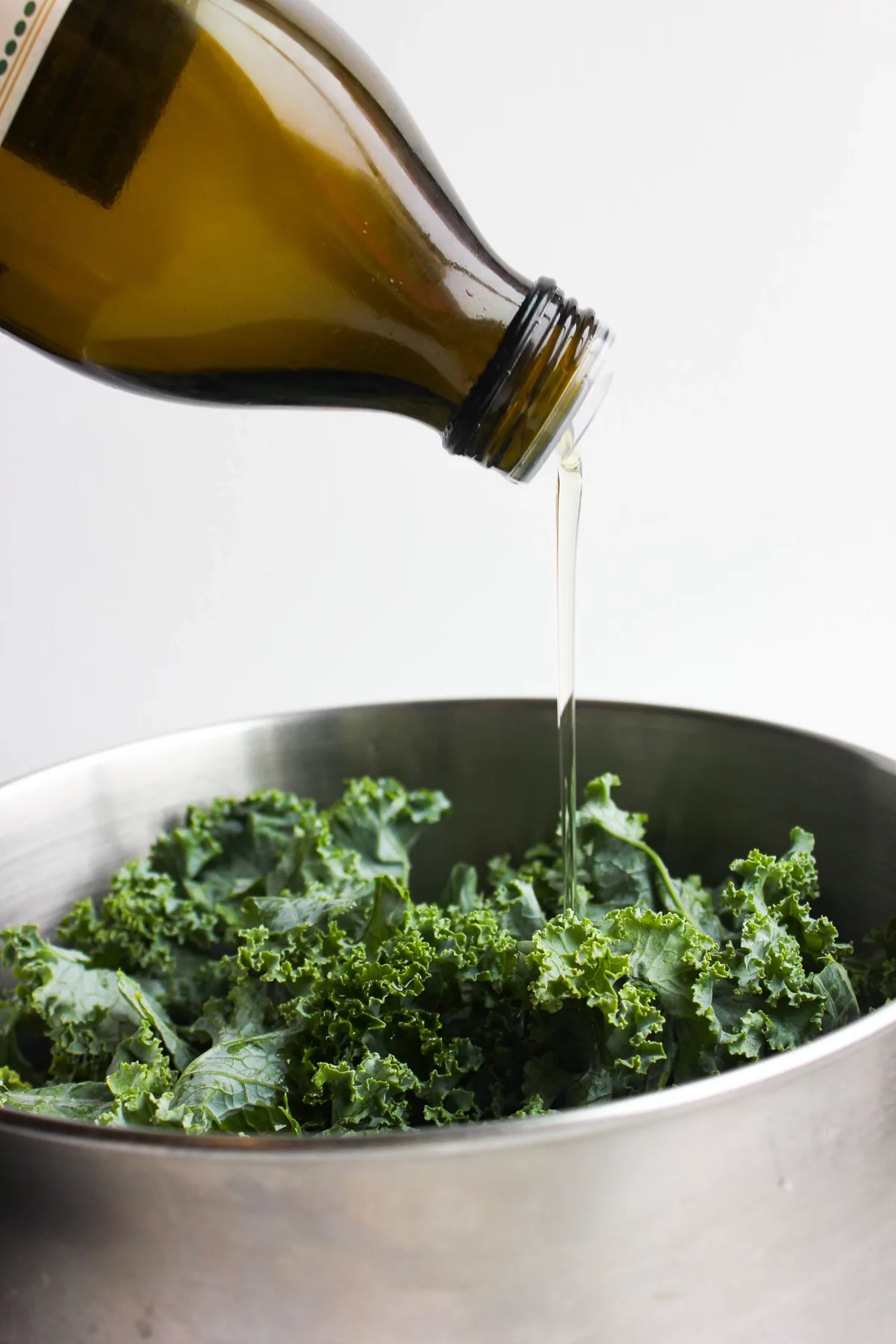
Then pour it raw over the plate you were going to eat anyway. Beans, greens, tomatoes, lentils, whole grains, herbs. That is both how the trials administered it and where it belongs: an added fat inside a plant-forward meal, not a shot taken on its own for its own sake. Cooking with it is fine, and heat and time will cost you some of the phenolics, so keep some back for the raw pour at the end.
Store it away from light and heat, with the cap on. The same compounds that make it worth buying are the ones that fade on a sunny worktop.
Read this next: the plant fibre with the best-evidenced cholesterol result on the site: 3 grams of oat fiber a day lowered LDL across 28 trials. Why a whole food usually beats its own extract: what food as medicine advice never mentions. How a lipid benefit gets quoted to you, and how to hear it properly: your statin’s benefit was quoted as a percentage. And the foundation all of this sits on: The Five Pillars of Owning Your Health.
Sources
- Covas MI, Nyyssönen K, Poulsen HE, et al. “The effect of polyphenols in olive oil on heart disease risk factors: a randomized trial.” Annals of Internal Medicine, 2006;145(5):333-341. https://pubmed.ncbi.nlm.nih.gov/16954359/
- Marrugat J, Covas MI, Fitó M, et al. “Effects of differing phenolic content in dietary olive oils on lipids and LDL oxidation: a randomized controlled trial.” European Journal of Nutrition, 2004;43(3):140-147. https://pubmed.ncbi.nlm.nih.gov/15168036/
- Weinbrenner T, Fitó M, de la Torre R, et al. “Olive oils high in phenolic compounds modulate oxidative/antioxidative status in men.” The Journal of Nutrition, 2004;134(9):2314-2321. https://pubmed.ncbi.nlm.nih.gov/15333722/
- Hernáez Á, Fernández-Castillejo S, Farràs M, et al. “Olive oil polyphenols enhance high-density lipoprotein function in humans: a randomized controlled trial.” Arteriosclerosis, Thrombosis, and Vascular Biology, 2014;34(9):2115-2119. https://pubmed.ncbi.nlm.nih.gov/25060792/
- Moreno-Luna R, Muñoz-Hernandez R, Miranda ML, et al. “Olive oil polyphenols decrease blood pressure and improve endothelial function in young women with mild hypertension.” American Journal of Hypertension, 2012;25(12):1299-1304. https://pubmed.ncbi.nlm.nih.gov/22914255/
- Sarapis K, George ES, Marx W, et al. “Extra virgin olive oil improves HDL lipid fraction but not HDL-mediated cholesterol efflux capacity: a double-blind, randomised, controlled, cross-over study (OLIVAUS).” British Journal of Nutrition, 2023;130(4):641-650. https://pubmed.ncbi.nlm.nih.gov/36377535/
- Estruch R, Ros E, Salas-Salvadó J, et al. “Primary Prevention of Cardiovascular Disease with a Mediterranean Diet Supplemented with Extra-Virgin Olive Oil or Nuts.” The New England Journal of Medicine, 2018;378(25):e34. https://pubmed.ncbi.nlm.nih.gov/29897866/
Article metadata retrieved from PubMed. Photograph from Pexels. Scripture quoted from the New American Standard Bible.
Educational content from True Health Solutions. We do not diagnose or prescribe, and nothing here is a substitute for care from someone who knows your history. The body heals. We write about what supports that design.
Questions people ask
- Is all olive oil basically the same?
- Not in the research. The trials that matter compared oils matched for fat but differing in phenolic content, and the markers tracked the phenolics rather than the fat. Refining strips most of those compounds out, so refined or light olive oil is not the food these studies measured.
- What did the big trial actually find?
- In EUROLIVE, 200 healthy men took 25 mL a day of three olive oils for three weeks each, containing 2.7, 164 or 366 mg of phenolics per kg. HDL cholesterol rose with all three oils and rose further as the phenolic content rose. Oxidised LDL fell linearly across the three, though only the high-phenolic result was significant on its own.
- Does olive oil lower blood pressure?
- One small trial points that way. In 24 young women with high-normal blood pressure or stage 1 hypertension, two months of polyphenol-rich olive oil was followed by a drop of 7.91 mmHg systolic and 6.65 diastolic compared with their own baseline. The polyphenol-free oil produced no such change.
- Is there a trial that did not find a benefit?
- Yes, and it matters. OLIVAUS gave 50 adults 60 mL a day of high- or low-polyphenol olive oil and found no significant differences between the two arms on cholesterol efflux. HDL rose after both oils, and LDL rose slightly after the high-polyphenol one.
- Can I cook with it?
- Yes. Heat and time do deplete phenolics, which is chemistry rather than a prohibition, so the raw pour is where the trials measured their effect. Those trials gave the oil raw, on or alongside food.
