
food · education ·
The Leafy Green Habit Linked To Slower Cognitive Decline (About 1 Serving A Day)
In 960 older adults followed nearly five years, the top fifth for leafy greens declined slower by an amount the authors compared to being 11 years younger.
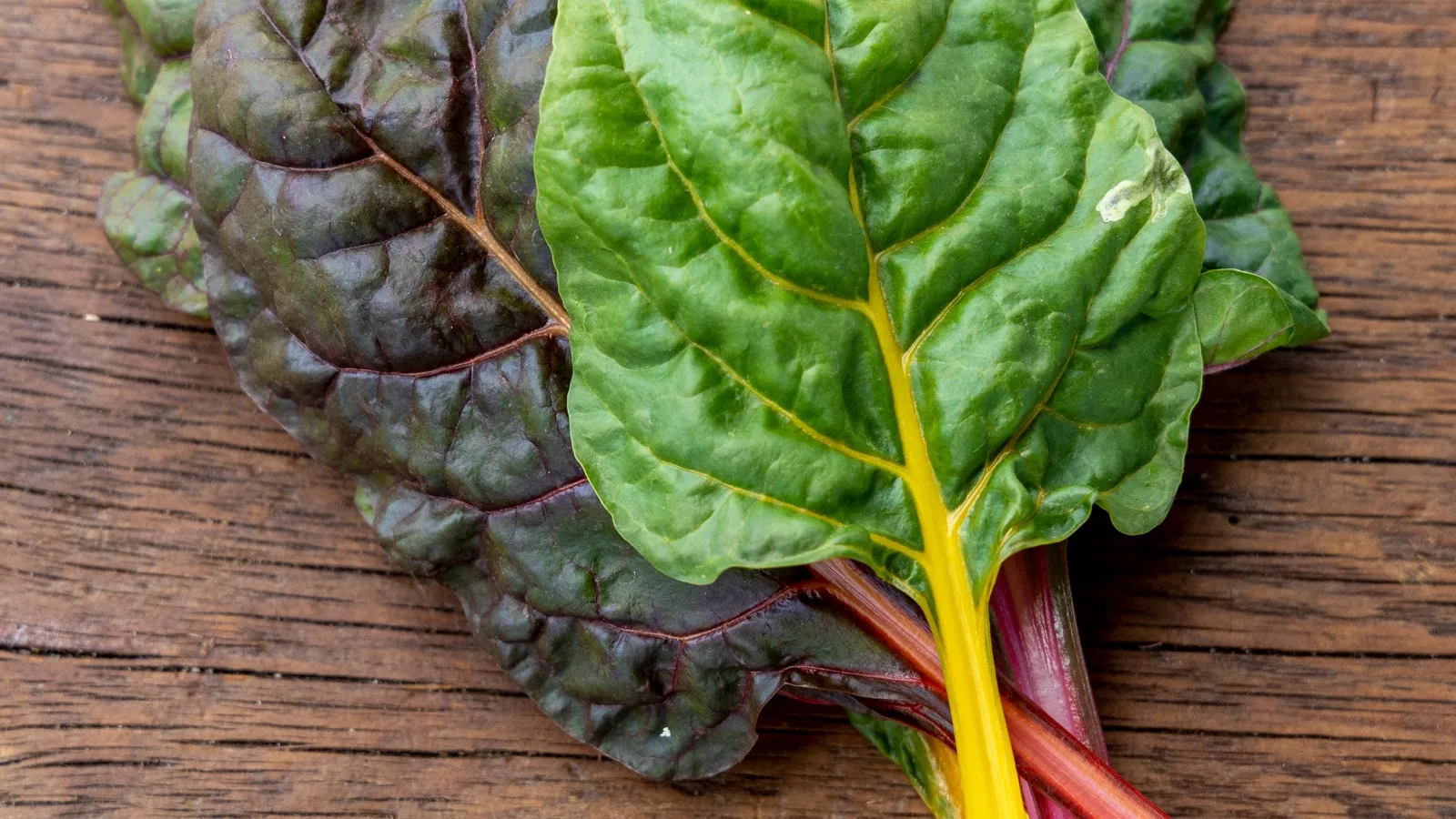
Most food-and-brain headlines are built on a mouse, a petri dish, or a single week in a lab. This one is built on 960 older adults who filled in a food questionnaire and then sat cognitive tests, over and over, for years.
That makes it better evidence than most of what gets written about this, and still not proof. Both halves of that sentence matter.
What they did
Researchers followed 960 participants of the Rush Memory and Aging Project, aged 58 to 99, who completed a food frequency questionnaire and had at least two cognitive assessments over a mean of 4.7 years (Morris et al., Neurology, 2018).
Then they sorted people into fifths by how many leafy greens they ate and watched how fast their test scores fell.
The top fifth ate a median of about 1.3 servings a day. Their cognitive decline was slower by 0.05 standardized units, with a p-value of 0.0001, in a model adjusted for age, sex, education, participation in cognitive activities, physical activity, smoking, and seafood and alcohol intake.
The 11 years, explained properly
That 0.05 figure means nothing to anybody, which is why the researchers translated it. They expressed the gap in terms of their own age effect, and it came out equivalent to being 11 years younger in age.
Here is what that is and is not. It is a unit conversion. The study measured a difference in how fast scores dropped, then asked how much younger somebody would have to be to show that much less decline, and the answer was about eleven years.
It is not a claim that eating salad bought anyone eleven years. Nobody’s brain got younger. A rate of change got gentler, in a group, on average, in a model.
That is still a striking number for a food habit, and it is the reason this study gets quoted. Just quote it the way the authors meant it.
Consumption of approximately 1 serving per day of green leafy vegetables and foods rich in phylloquinone, lutein, nitrate, folate, alpha-tocopherol, and kaempferol may help to slow cognitive decline with aging.
Morris et al., Neurology, 2018
What is actually in the leaf
The more interesting half of this paper is that the researchers did not stop at “greens”. They pulled apart the primary nutrients and bioactives concentrated in leafy vegetables and tested each one separately against cognitive decline.
Six of the seven held up:
| What it is | Where you have heard of it | Association with slower decline |
|---|---|---|
| Folate | The B vitamin named after foliage | beta = 0.05, p < 0.001 |
| Lutein | The pigment studied for eyes | beta = 0.04, p = 0.002 |
| Nitrate | The compound behind beetroot’s reputation | beta = 0.04, p = 0.002 |
| Kaempferol | A flavonoid in leaves and tea | beta = 0.04, p = 0.003 |
| Alpha-tocopherol | A form of vitamin E | beta = 0.03, p = 0.02 |
| Phylloquinone | Vitamin K, the clotting one | beta = 0.02, p = 0.002 |
| Beta-carotene | The orange one, in carrots too | beta = 0.02, p = 0.08, not significant |
Notice the odd one out. Beta-carotene is the single compound on that list most associated with supplements, and it is the one that did not reach significance. Everything that did is something that arrives in a leaf alongside everything else on the list.
That is not proof that the combination is what matters. It is a strong hint, and it is the reason this article is about a vegetable rather than a capsule.
Two more cohorts pointing the same way
One study is one study, so here is what sits around it.
The same research group built a diet score called MIND, a hybrid of the Mediterranean and DASH patterns that puts leafy greens at its centre, and followed 923 people aged 58 to 98 for an average of 4.5 years to see who developed Alzheimer’s disease. Against the lowest third of adherence, the highest third had a hazard ratio of 0.47 (95% CI 0.26 to 0.76). The middle third landed at 0.65, which the authors read as moderate adherence also mattering (Morris et al., Alzheimer’s and Dementia, 2015).
Zoom out further and a meta-analysis pooled 16 observational studies covering 64,348 participants and 9,879 cases of cognitive disorder. Vegetable intake was associated with an odds ratio of 0.75 (0.70 to 0.80) (Zhou et al., Frontiers in Nutrition, 2022).
And the honest line from that same review: when they broke the outcome apart, the association held for cognitive impairment and for dementia, but for Alzheimer’s disease specifically it did not reach significance, at 0.88 with a confidence interval of 0.76 to 1.01 crossing 1.
So the pattern is consistent across cohorts and it is not uniform across every outcome. That is what a real body of observational evidence looks like, and it is more trustworthy than a tidy one.
Now the limits, because they are the whole ballgame
This is observational. Nobody was assigned to eat greens. People who eat a daily salad in their seventies differ from people who do not, in ways a questionnaire cannot fully capture: income, cooking ability, who shops for them, how much else they do, how well they already feel.
And the direction of cause is genuinely uncertain here in a way that deserves saying out loud. Early cognitive decline changes behaviour before anybody notices it, including shopping and cooking. A person whose thinking is slipping may quietly stop making salads. That would produce exactly this result with the arrow pointing the other way.
The adjustments help. They do not settle it. No trial has randomised people to greens and measured dementia, and until one does, this stays an association.
What makes it worth your attention anyway is the cost of acting on it. If this finding is real, you gain something that matters enormously. If it is entirely confounding, you ate more vegetables, which has about forty other arguments behind it. That asymmetry is why we are writing it up, and it is a different situation from a supplement that costs money and carries risk.
Where the design shows up
The thing to notice is that the list of compounds is not a list of ingredients. It is a description of a leaf.
A plant makes phylloquinone because it needs it for photosynthesis. It makes lutein to protect itself from light damage. It pulls nitrate from the soil and folate runs its own cell division. None of that was designed for your brain. It is the machinery a leaf needs to be a leaf.
And six of those seven tracked with slower cognitive decline in the people eating them. Which is either a remarkable coincidence or a hint about how we were built to be fed: not from a list of isolated compounds, but from things that were themselves alive and needed the same chemistry we do.
“And God said, Behold, I have given you every plant yielding seed that is on the surface of all the earth.” Genesis 1:29, NASB
The verse carries the conviction. Nine hundred and sixty older adults over nearly five years carry the association.
What to do this week
Aim for one serving a day and stop optimising. That is roughly half a cup of cooked greens or a cup of raw salad, which is the scale the academy’s summary of this study described. One. Daily beats heroic.
Make it the easiest version you will actually repeat. A handful of spinach thrown into whatever is already in the pan at the end, where it wilts in ninety seconds and you barely taste it. Chard or collards cooked with garlic. A bag of salad you commit to finishing before it liquefies in the drawer.
Rotate what you buy, since the compounds are not identical across leaves and variety costs nothing extra. Spinach, kale, collards, chard, mustard greens, arugula, romaine. Pair them with a fat, because lutein, vitamin K and alpha-tocopherol all travel better with one, which is a real reason to put olive oil on your salad rather than a diet confession.
If you take a blood thinner, talk to your prescriber before you change your greens intake. Vitamin K interacts with warfarin, and the thing that matters there is consistency rather than avoidance. This is the one place where “just eat more greens” is genuinely the wrong advice to take from an article.
Read this next: what the phenolics in a real olive oil did in trials, and why that pairs with a salad: not all olive oil is the same food. The colour rule for the rest of the plate: the color your arteries understand. Breakfasts built on the same principle: 3 plant breakfasts that hold. And why the whole food keeps beating the extract: what food as medicine advice never mentions.
Sources
- Morris MC, Wang Y, Barnes LL, Bennett DA, Dawson-Hughes B, Booth SL. “Nutrients and bioactives in green leafy vegetables and cognitive decline: Prospective study.” Neurology, 2018;90(3):e214-e222. https://pubmed.ncbi.nlm.nih.gov/29263222/
- Morris MC, Tangney CC, Wang Y, Sacks FM, Bennett DA, Aggarwal NT. “MIND diet associated with reduced incidence of Alzheimer’s disease.” Alzheimer’s & Dementia, 2015;11(9):1007-1014. https://pubmed.ncbi.nlm.nih.gov/25681666/
- Zhou Y, Wang J, Cao L, et al. “Fruit and Vegetable Consumption and Cognitive Disorders in Older Adults: A Meta-Analysis of Observational Studies.” Frontiers in Nutrition, 2022;9:871061. https://pubmed.ncbi.nlm.nih.gov/35795585/
- American Academy of Neurology. “Eating green leafy vegetables may help keep your brain young.” Press summary of Morris et al., 2017. https://www.aan.com/PressRoom/Home/PressRelease/1590
Article metadata retrieved from PubMed. Photograph from Pexels. Scripture quoted from the New American Standard Bible.
Educational content from True Health Solutions. We do not diagnose, treat, cure or prevent disease, and nothing here is a substitute for care from someone who knows your history. The body heals. We write about what supports that design.
Questions people ask
- How much is the serving in this study?
- The top fifth of eaters had a median of about 1.3 servings a day. In the American Academy of Neurology's summary of the study, a serving was described as about half a cup of cooked greens like spinach, kale or collards, or about one cup of raw lettuce salad.
- How strong is this evidence?
- It is a prospective observational cohort, not a trial. 960 participants in the Rush Memory and Aging Project, aged 58 to 99, with at least two cognitive assessments over a mean of 4.7 years. It shows an association, not that greens caused the slower decline.
- What does 11 years younger mean here?
- It is a translation, not a measurement. The top fifth for leafy green intake declined slower by 0.05 standardized units, and the researchers expressed that gap in terms of their own age effect, so it came out roughly equal to the decline you would expect from someone 11 years younger.
- Which compounds in greens looked relevant?
- Six of the seven tested were individually associated with slower decline: phylloquinone, which is vitamin K, plus lutein, folate, alpha-tocopherol, nitrate and kaempferol. Beta-carotene was the exception and did not reach significance.
- Does this mean I should buy supplements of those?
- Nothing in this study tested a supplement. It measured food intake through a questionnaire, and the compounds travel together in the leaf. Buying six of them separately in capsules is not what was studied.
