
education · food ·
Hungry By 10am? 3 Plant Breakfasts That Actually Hold You Over
Not a meal plan. Three breakfasts assembled from the specific things the trials found actually work, and the reason each one is on the list.
The companion to this piece explains why most healthy breakfasts do less than they should: the food has usually been milled, and half of your response was set by dinner.
This is the practical half. Three breakfasts, each built from things we have already written about, with the reason for every component.
They are not recipes so much as assemblies. Swap any part for something in the same role.
The rules they are built on
Four findings, all of which have their own article on this site.
Intact beats milled. The subsequent meal effect is lost to milling, processing and high-temperature cooking (Higgins, Journal of Nutrition and Metabolism, 2012). Steel-cut over instant. Whole beans over flour.
Legumes carry the most weight. A bean dinner lowered the next morning’s glucose response by 15% and hunger by 15% (Nilsson et al., PLoS One, 2013). They work in the other direction too.
Fibre is the number nobody hits. Risk reduction across major outcomes was greatest between 25 and 29 grams a day (Reynolds et al., The Lancet, 2019). Breakfast is a good place to bank a third of it.
Fullness is real, but it has a limit. Pulses produced 31% greater satiety than control meals across nine trials, and the same analysis found no consistent reduction in what people ate at the next meal (Li et al., Obesity, 2014). You will feel fuller. Whether you eat less later is not established, and we are not going to promise it.
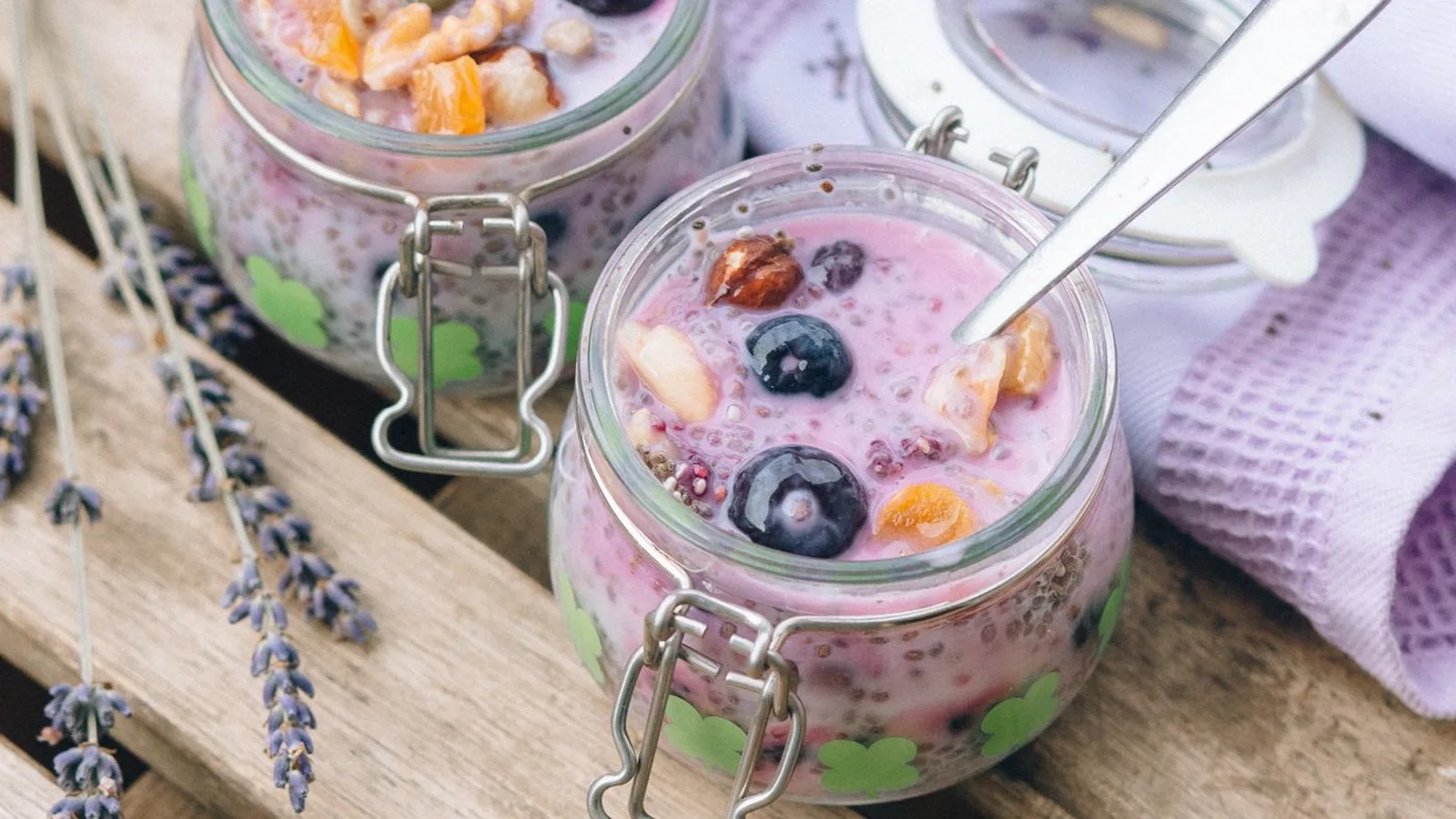
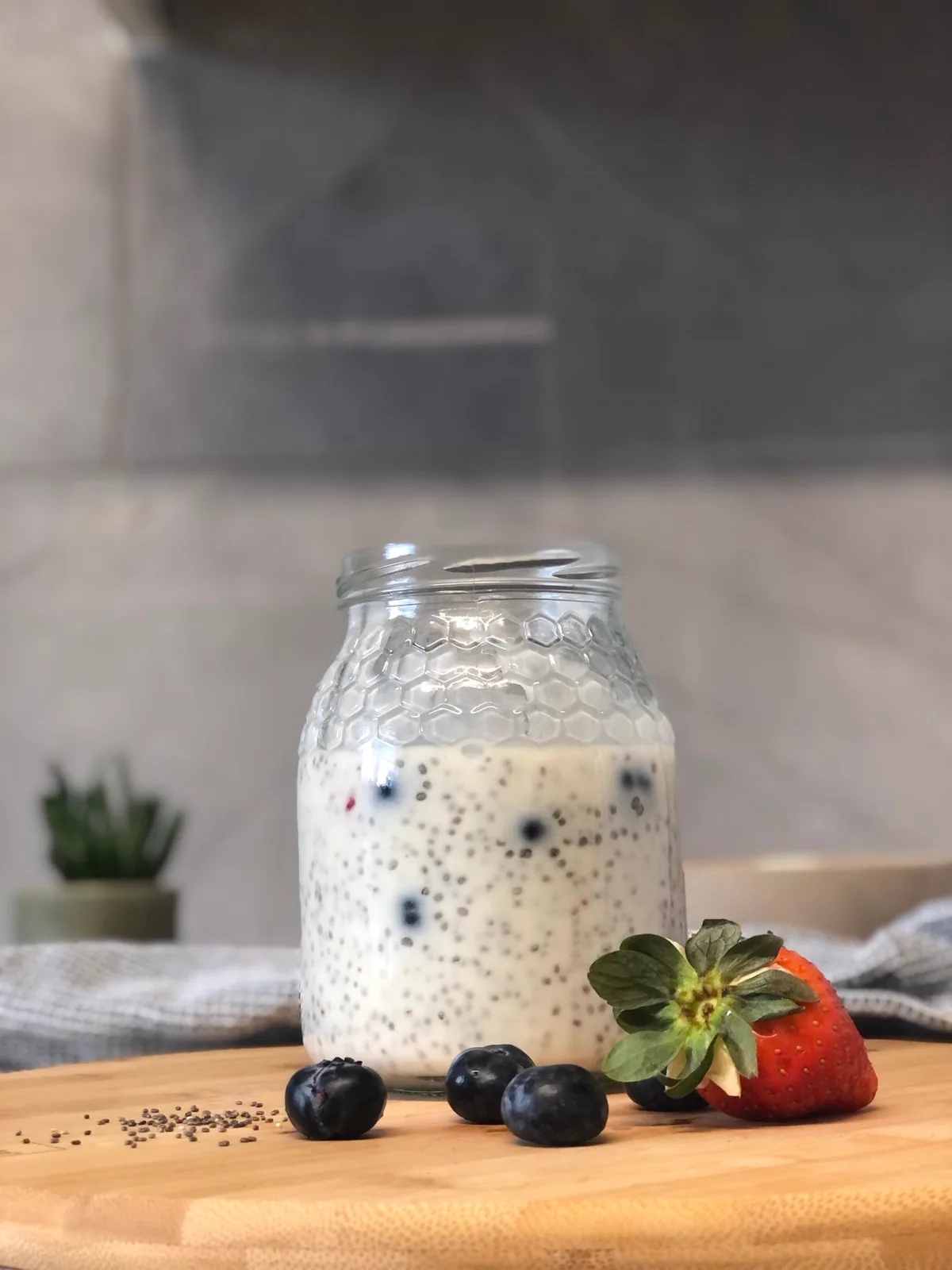
One: overnight oats, built properly
Steel-cut or rolled oats, not instant. Cover with water or a plant milk the night before and leave them in the fridge.
In the morning add a handful of frozen berries, a spoon of ground flax or chia, and a scatter of nuts.
Why each part is there. The oats stay intact because you soaked them instead of blasting them. The berries are the one-cup dose from the blueberry trial, and frozen is cheaper and works. The flax and nuts add fibre and fat, which slows everything further.
This takes two minutes the night before and none in the morning, which is the only reason anyone keeps doing it.
Two: beans on toast, taken seriously
Real beans. Not the tinned ones in sweet tomato sauce, which are mostly sugar.
Warm a cup of whatever beans you have with garlic, olive oil, smoked paprika and a squeeze of lemon. Put it on one slice of the most intact bread you can find, ideally a dense sourdough rather than a soft sliced loaf. Top with rocket or spinach.
Why each part is there. The beans are the highest-fibre single thing you can put on a plate, around 15 grams a cup, and the legume effect is the best-documented one here. The garlic goes in crushed and rested. The rocket is dietary nitrate. The bread is the weakest link and the article is honest about that: flour is milled, and one slice is a compromise with the fact that people like toast.
Three: the savoury bowl
Leftover lentils or chickpeas, warmed. Any cooked whole grain from the night before. Whatever vegetable is in the fridge, wilted in a pan. Something acidic on top.
Why each part is there. This is the breakfast that most of the world already eats and that Americans find strange. It is legumes plus intact grain plus vegetables, which is the pattern the Mediterranean trials measured across 57 studies and 36,983 adults.
The real advantage is that it is leftovers. The breakfast you will still be eating in March is the one that requires no decisions at 6am.
What none of these are
They are not low-carb, and they are not trying to be. The research this site keeps landing on says the quality and structure of the carbohydrate matters far more than the quantity, and that dietary fibre was the best-supported marker of carbohydrate quality in the largest review of the question.
They are also not a weight loss plan. Fullness is a real measured effect here. Eating less later is not, and we will not pretend the trials showed something they did not.
Where the design shows up
Every one of these is boring, cheap and old.
Soaked grain, cooked legumes, leftover vegetables. Not one of them is a product, none of them was invented by anybody, and all three are what people ate before a food industry existed to improve on them.
“Then God said, ‘Behold, I have given you every plant yielding seed that is on the surface of all the earth, and every tree which has fruit yielding seed; it shall be food for you.’” Genesis 1:29, NASB
The verse carries the conviction. The trials named above carry the evidence.
What to do this week
Pick one. Make it three times.
Not all three. One, three times, so it stops requiring a decision. The overnight oats are the lowest-effort entry point and the savoury bowl is the cheapest if you already cook dinner.
And the thing that makes any of them work better, from the companion piece: put beans at dinner too. The effect runs in both directions, and a household that eats legumes twice a day is doing more for its blood sugar than any breakfast product on a shelf.
Read this next: the research behind all of this is in your breakfast blood sugar was partly decided at dinner last night. For the fibre target, why fiber advice always skips what your colon actually does. And if beans are the sticking point, in the bean studies even the control group reported gas.
Sources
- Higgins JA. “Whole grains, legumes, and the subsequent meal effect: implications for blood glucose control and the role of fermentation.” Journal of Nutrition and Metabolism, 2012;2012:829238. https://pubmed.ncbi.nlm.nih.gov/22132324/
- Nilsson A, Johansson E, Ekström L, Björck I. “Effects of a brown beans evening meal on metabolic risk markers and appetite regulating hormones at a subsequent standardized breakfast: a randomized cross-over study.” PLoS One, 2013;8(4):e59985. https://pubmed.ncbi.nlm.nih.gov/23577078/
- Reynolds A, Mann J, Cummings J, Winter N, Mete E, Te Morenga L. “Carbohydrate quality and human health: a series of systematic reviews and meta-analyses.” The Lancet, 2019;393(10170):434-445. https://pubmed.ncbi.nlm.nih.gov/30638909/
- Li SS, Kendall CWC, de Souza RJ, et al. “Dietary pulses, satiety and food intake: a systematic review and meta-analysis of acute feeding trials.” Obesity, 2014;22(8):1773-1780. https://pubmed.ncbi.nlm.nih.gov/24820437/
Article metadata retrieved from PubMed.
Educational content from True Health Solutions. We do not diagnose or prescribe, and nothing here is a substitute for care from someone who knows your history. The body heals. We write about what supports that design.
Questions people ask
- What makes a breakfast hold until lunch?
- Intact structure rather than milled flour, fibre your colon can ferment, and enough volume. In a meta-analysis of nine trials, pulses produced 31% greater satiety than control meals, though notably that did not translate into eating less at the next meal.
- Are these recipes?
- Not really. They are assemblies, chosen because each component appears in research we have written about. Swap anything for something in the same role and it still works.
- Why beans at breakfast?
- Because the second-meal research keeps pointing at legumes, and because a cup of beans is worth around 15 grams of fibre against a target of 25 to 29. It is the single biggest lever available at any meal.
- What about protein?
- These are plant-protein breakfasts: beans, lentils, nuts, seeds, oats. Across a varied day most people meet their amino acid needs without engineering it, and protein is not the mechanism behind the second-meal effect anyway.
- Do I have to eat breakfast?
- This article does not take a position on that. It is about what to eat if you are eating one.
