
food · education ·
About 1 Cup Of Beans A Day Moved The Scale In 21 Trials (By Less Than You'd Hope)
Pooled randomised trials found 0.34 kg. Small, real, and it showed up even when the diets were not meant to cut calories. That last part is the interesting bit.
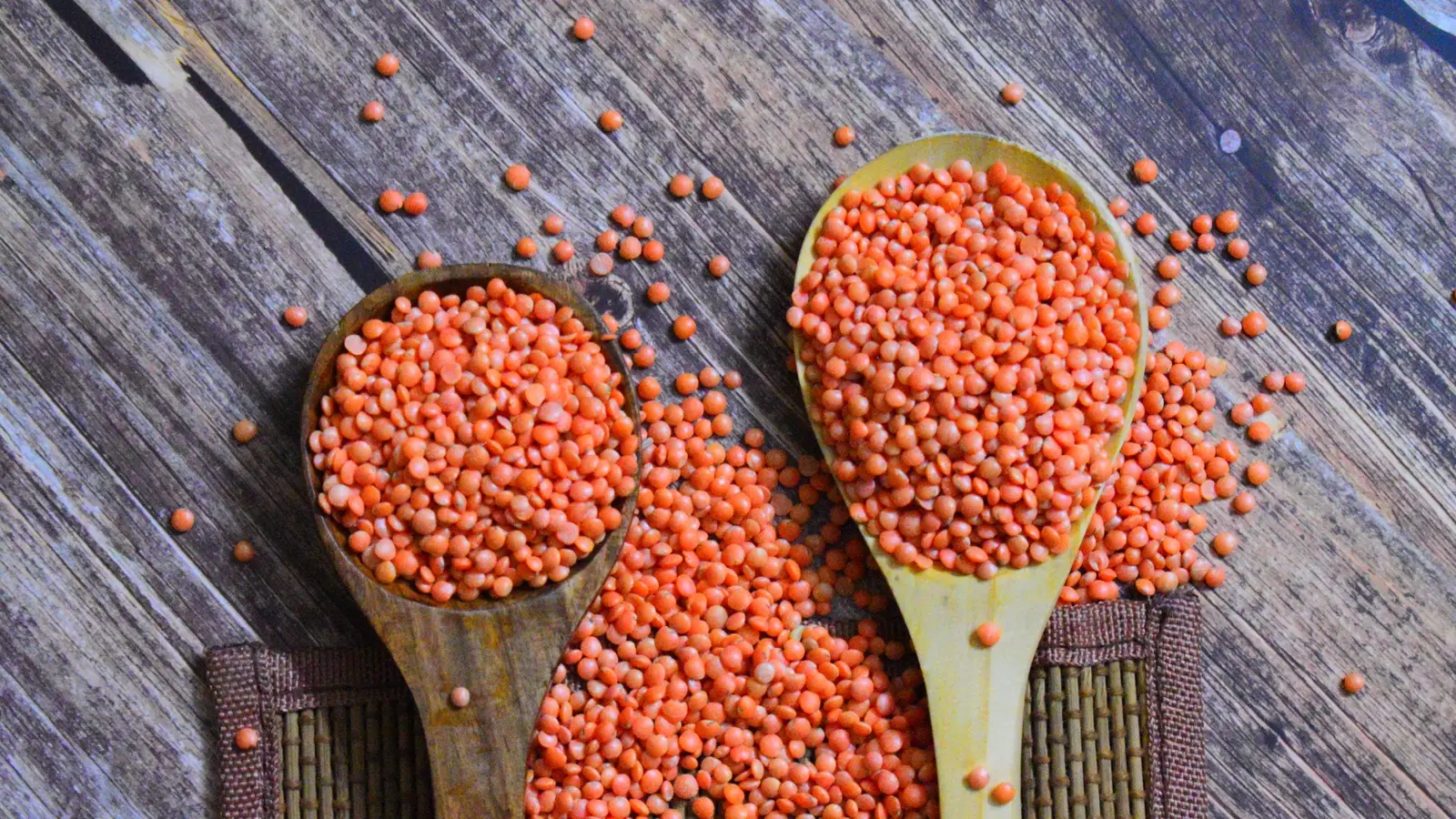
Here is a number that will not sell a diet book. Across 21 randomised trials, adding beans to the plate moved body weight by about a third of a kilogram.
Stay with it anyway, because the small number is not the finding. Where the small number showed up is the finding.
What was pooled
Researchers searched four databases and gathered every randomised controlled trial lasting three weeks or longer that compared a diet containing whole dietary pulses, meaning beans, lentils, chickpeas and dry peas, against a comparator diet without them. That came to 21 trials covering 940 participants (Kim et al., American Journal of Clinical Nutrition, 2016).
The pooled result was a weight reduction of 0.34 kg (95% CI 0.04 to 0.63, p = 0.03), over a median duration of 6 weeks, at a median intake of about 132 grams a day, which is roughly one serving or a cup of cooked beans.
Between-study heterogeneity was low, meaning the trials broadly agreed with each other rather than averaging out wildly different results. Six of them also pointed toward a reduction in body fat percentage, which the authors treat as secondary and so do we.
The part that is actually interesting
A third of a kilogram over six weeks is, on its own, nearly nothing. Your weight moves more than that between Tuesday and Thursday.
So why does this study get cited? Because of where the effect appeared.
The weight reduction was significant in two separate conditions. It showed up in matched negative-energy-balance diets, which are the ones designed for weight loss. And it showed up in neutral-energy-balance diets, which were not intended to be calorie-restricted at all.
That second one is the result worth having. In those arms, the calories were meant to be level. Beans went in, and the scale moved anyway.
That cannot be explained by “eating beans made people eat fewer calories on purpose”, because that was not the design. Something about the food itself changed the outcome at matched intake. The authors’ own reading is that pulses are a beneficial weight strategy precisely because the effect persists when diets are not meant to be restricted.
What is probably doing it
We can offer a mechanism here, and we are going to label it as mechanism rather than proof.
Pulses are an unusual combination: a lot of fibre, a meaningful amount of plant protein, and carbohydrate that digests slowly because of how it is physically packaged inside the seed. All three of those are associated with staying full longer and with a flatter blood sugar response.
Some of the effect may also be arithmetic that nobody intended. Pulses are bulky and filling per calorie, so a cup of beans on the plate displaces something else. That is not cheating. It is most of how food works.
What we cannot tell you is which of those explanations carries the result, because this pooling was not designed to separate them.
The limits, said plainly
Six weeks is six weeks. The median trial here is a month and a half. Nothing in this pool followed anyone for a year, and the authors say outright that longer studies are needed to know whether the effect sustains.
Nine hundred and forty people across 21 trials is modest, and pulse type, preparation and the background diet all varied between them.
And the effect is small. We are not going to inflate a third of a kilogram into a transformation. Anybody selling beans as a fat-loss protocol is ahead of this evidence, and the number above is the reason.
What legumes have not been shown to do
A 2023 review went looking for the hard outcomes, and it is the honesty counterweight this article needs.
It gathered 47 studies, including 31 prospective cohorts covering 2,081,432 participants and 14 crossover randomised trials (Thorisdottir et al., Food and Nutrition Research, 2023).
The randomised trials found the markers moved: total cholesterol down 0.22 mmol/L, LDL cholesterol down 0.19, fasting glucose down 0.19, and HOMA-IR, a measure of insulin resistance, down 0.30. Heterogeneity was high across most of those, over 75% for several.
But the pooled cohort studies were suggestive of null associations for cardiovascular disease, coronary heart disease, stroke and type 2 diabetes. The authors’ conclusion is worth quoting straight: legume consumption was not found to influence risk of cardiovascular disease and type 2 diabetes in healthy adult populations with generally low legume consumption, while the protective effects on risk factors lend some support for recommending them inside a varied diet.
Read that as it is written. Markers improved in trials. Disease rates did not separate in cohorts. That gap is the single most common place where food writing overreaches, and we are not going to step over it here.
One thing that does carry stronger evidence is the pattern rather than the ingredient. An umbrella review of the DASH eating pattern, which puts legumes alongside vegetables, fruit, whole grains and nuts, found it associated with lower cardiovascular disease incidence (RR 0.80) in cohorts and, in controlled trials, lower systolic blood pressure by 5.2 mmHg and lower body weight by 1.42 kg (Chiavaroli et al., Nutrients, 2019).
Which is the recurring lesson. The plate beats the ingredient, and beans are a good reason the plate works rather than a lever of their own.
Where the design shows up
A bean is a seed with a job. It carries everything a new plant needs to get started, which is why it is dense in protein, minerals and stored carbohydrate, and why it wraps all of that inside a structure built to survive being dry for a year and then still grow.
That structure is why beans behave the way they do in a body. The starch is physically harder to get at, so it breaks down slowly. The fibre is not an additive somebody mixed in, it is the packaging. You are eating a food that was engineered by its own survival requirements to release its contents gradually.
Which is roughly the opposite of how most modern carbohydrate reaches a plate, and it may be the whole explanation for a small number appearing where the calories were supposed to be equal.
“Take for yourself wheat, barley, beans, lentils, millet and spelt, put them in one vessel and make them into bread for yourself.” Ezekiel 4:9, NASB
The verse carries the conviction. Twenty-one randomised trials carry the third of a kilogram.
What to do this week
Put about a cup of cooked pulses on one plate a day. Not a new diet. One addition, to food you were already going to eat. A tin of chickpeas into a salad, lentils into whatever soup is happening, black beans in a bowl with rice and whatever vegetables are in the fridge.
Tinned is fine. Drained and rinsed, it is cheap, it keeps for two years, and it needs no planning, which matters more than optimisation does. Dried is cheaper again if you will actually soak them.
Start smaller if beans have gone badly before. Half a cup, every day, for a fortnight, and let your gut bacteria catch up before increasing. The adjustment is real and it is temporary, and we set out the soak-rinse-cook-pace approach in how to eat beans without the gas.
And eat them for the whole case rather than for the scale. The weight finding is the smallest reason on the list.
Read this next: why beans keep turning up where people stay well longest: why beans keep showing up. The fibre with the best-evidenced cholesterol result on this site: 3 grams of oat fiber a day lowered LDL. Breakfasts built on the same principle: 3 plant breakfasts that hold. And what your colon is actually doing with all that fibre: why fiber advice skips what your colon does.
Sources
-
Kim SJ, de Souza RJ, Choo VL, et al. “Effects of dietary pulse consumption on body weight: a systematic review and meta-analysis of randomized controlled trials.” The American Journal of Clinical Nutrition, 2016;103(5):1213-1223. https://pubmed.ncbi.nlm.nih.gov/27030531/
-
Thorisdottir B, Arnesen EK, Barebring L, et al. “Legume consumption in adults and risk of cardiovascular disease and type 2 diabetes: a systematic review and meta-analysis.” Food & Nutrition Research, 2023;67:9541. https://pubmed.ncbi.nlm.nih.gov/37288088/
-
Chiavaroli L, Viguiliouk E, Nishi SK, et al. “DASH Dietary Pattern and Cardiometabolic Outcomes: An Umbrella Review of Systematic Reviews and Meta-Analyses.” Nutrients, 2019;11(2):338. https://pubmed.ncbi.nlm.nih.gov/30764511/
Article metadata retrieved from PubMed. Photograph from Pexels. Scripture quoted from the New American Standard Bible.
Educational content from True Health Solutions. We do not diagnose, treat, cure or prevent disease, and nothing here is a substitute for care from someone who knows your history. The body heals. We write about what supports that design.
Questions people ask
- How much weight did pulses move in the trials?
- A meta-analysis of 21 randomised controlled trials in 940 participants found diets containing whole pulses produced a weight difference of 0.34 kg against comparator diets, with a 95% confidence interval of 0.04 to 0.63 kg and a p-value of 0.03, over a median of 6 weeks.
- How many beans is that?
- The median intake across those trials was about 132 grams a day, which is roughly one serving, or about a cup of cooked beans, lentils, chickpeas or dry peas.
- Does it only work if you are cutting calories?
- No, and this is the most interesting part. Weight reduction was significant both in matched negative-energy-balance diets intended for weight loss and in neutral-energy-balance diets that were not meant to be calorie restricted at all.
- Is a third of a kilogram worth bothering with?
- On its own, barely. It matters as a signal rather than as a result: something about the food changed the outcome when the calories were held level. And beans are worth eating for fibre, protein, minerals and cost regardless of what the scale does.
- Did body fat change too?
- Six of the included trials suggested pulse consumption may reduce body fat percentage. The review treats that as a secondary finding resting on fewer studies, and so do we.
